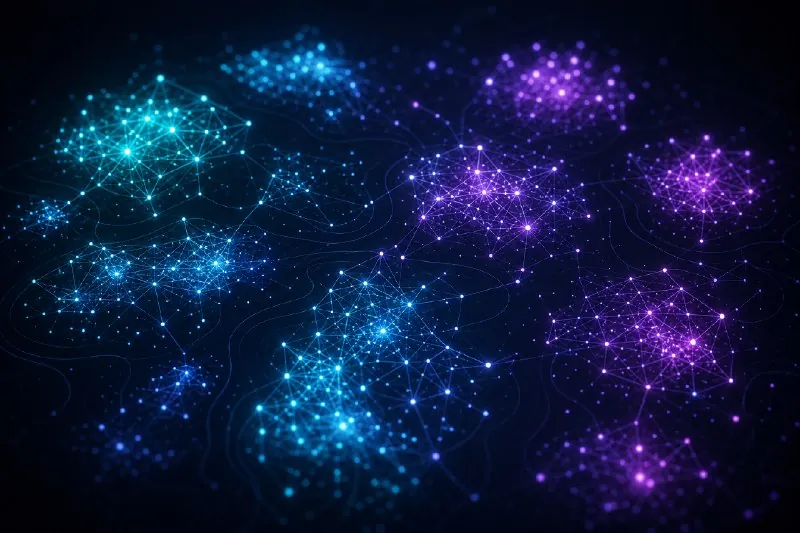
An embedding is a way to turn text, an image or another object into a set of numbers so that things similar in meaning end up close together.
Imagine a city map. Coffee shops can be close to each other not by address but by features: quiet for working, good filter coffee, power outlets. An embedding builds a similar “map of meanings”.
The phrases “how to return an item” and “request a refund for a purchase” will be neighbors on such a map, even though the words barely overlap. And “delivery status” will be further away.
In practice embeddings are used for semantic search, recommendations, finding duplicates in a database, grouping support requests. I often see them as a useful layer between chaotic data and product logic.
But this isn’t understanding the text. An embedding answers “what’s similar?” well, but “what’s true?” poorly. It can bring together two similarly worded documents, one of which is outdated or contradicts the other.
So closeness in a vector database is a candidate for checking, not a ready answer.