Prompt Engineering for LLMs
John Berryman, Albert Ziegler
- AI and agents
- LLM
- Prompt engineering
The authors are engineers who built GitHub Copilot. The book isn’t about “magic phrases” but about how to build an application around a model: how an LLM sees text, how to assemble context for it from user data, how conversational agents with tools and multi-step workflows work, and how to evaluate answer quality.
Key ideas
- The model continues a document: a prompt should look like a document whose natural continuation is the answer.
- Context is limited, so fragments are selected and ordered by importance rather than all thrown in.
- An LLM application is a loop: user request → prompt assembly → model response → turning the response into an action.
- Without evaluation on a set of examples, you can’t tell whether a prompt got better or worse.
How I apply it
In AI agents I assemble the prompt from a template, retrieved knowledge base fragments and the conversation history, and I check prompt changes on a set of test questions rather than by eye.
Where and how I applied it
Demo · Telegram and Max · knowledge base search
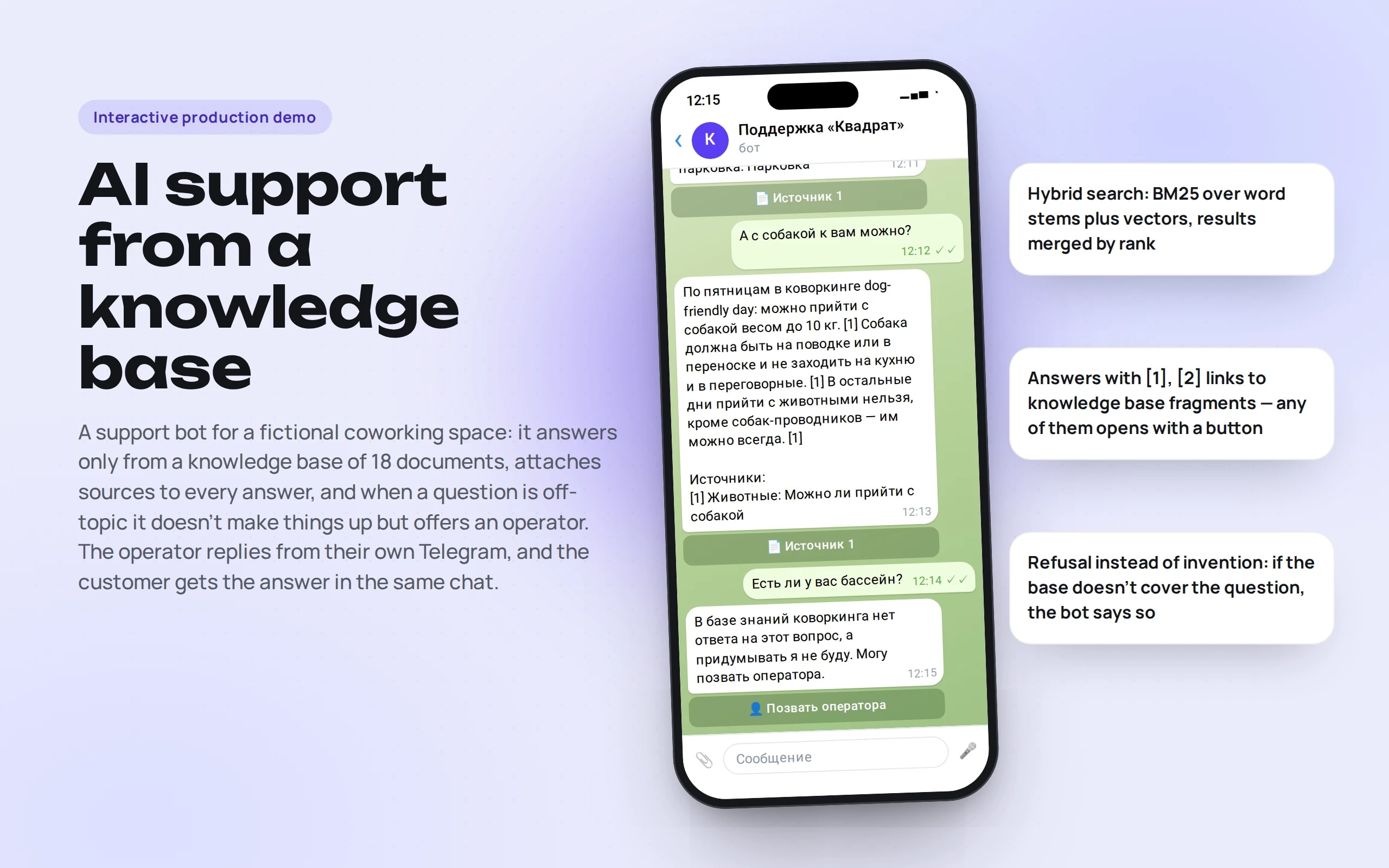
AI support from a knowledge base
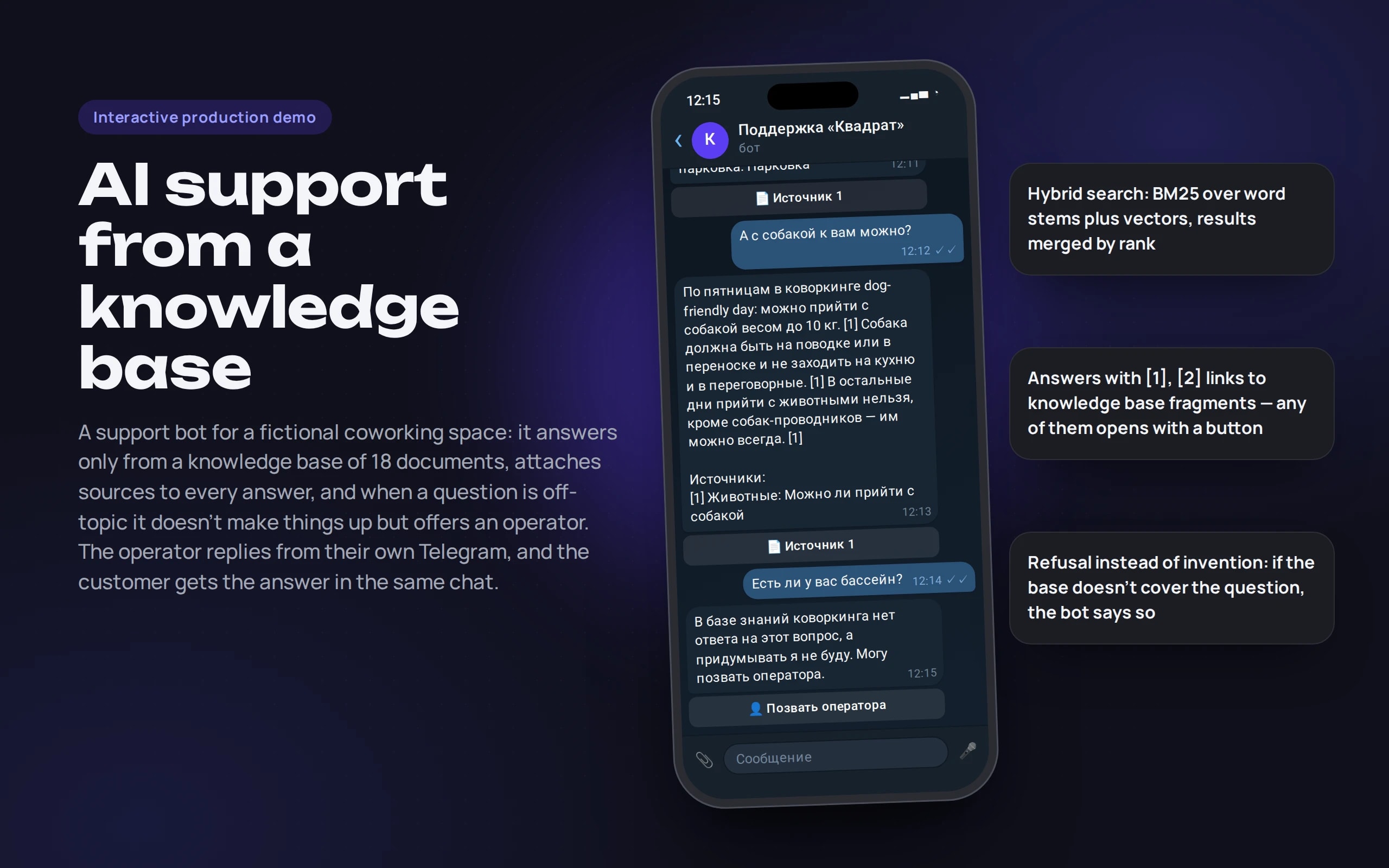
The prompt is built from the knowledge base fragments that were found: only the most relevant go into the context, the answer cites them as [1], [2], and if the base doesn’t cover the question the bot honestly declines.
Demo · Web app · metrics · CI thresholds
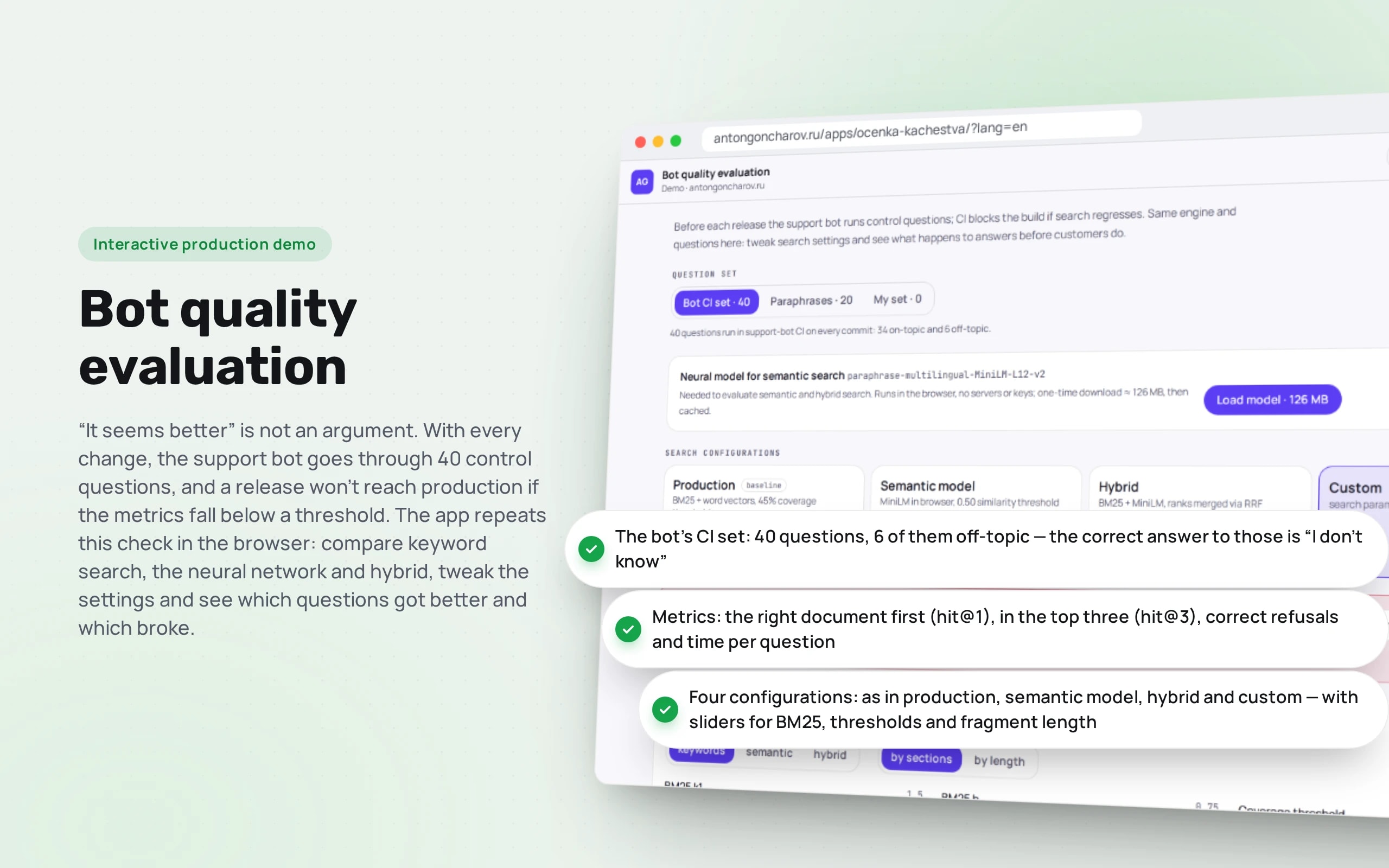
Bot quality evaluation
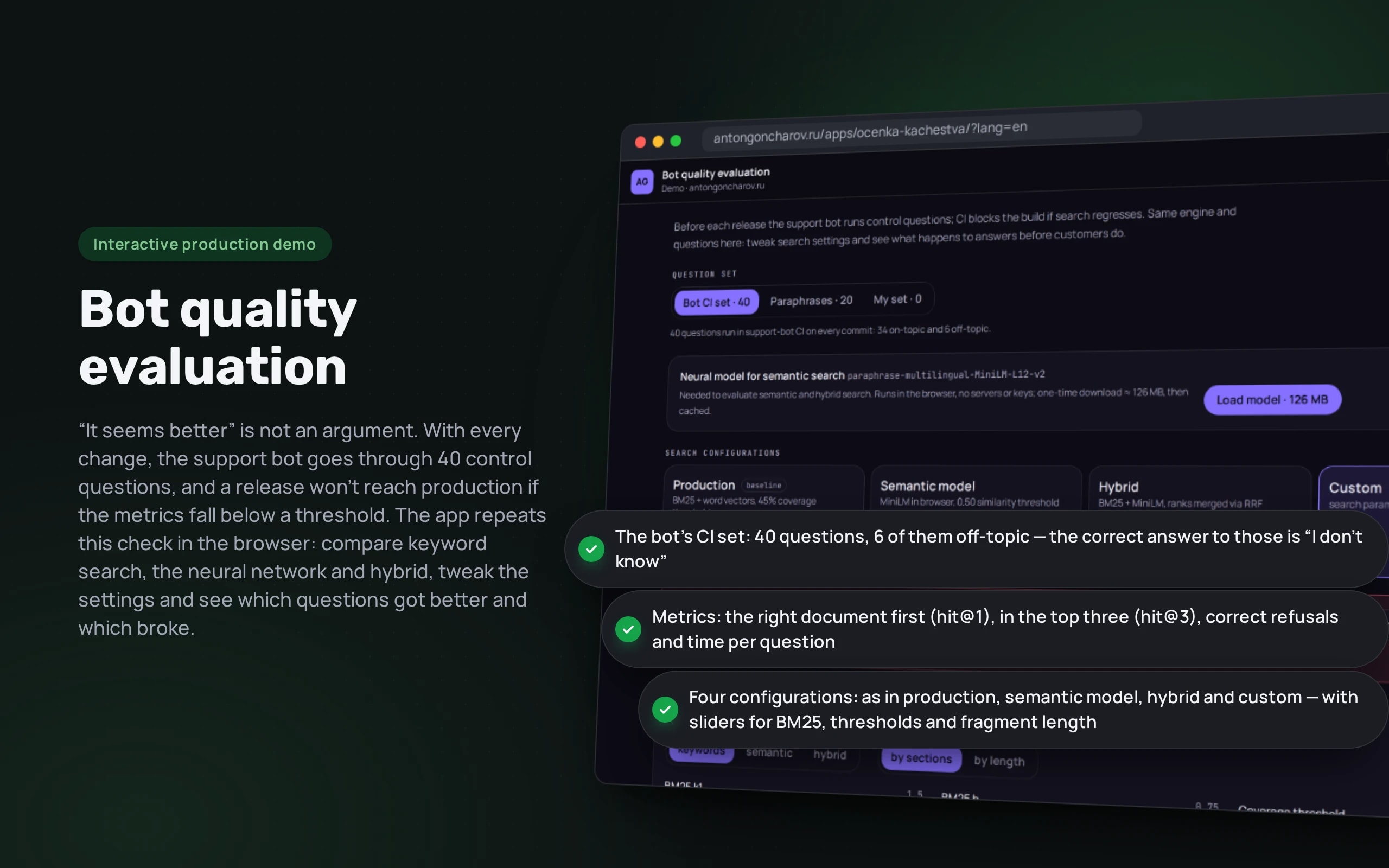
Every change to the bot’s settings runs on 40 test questions: hit@1, hit@3 and the share of correct refusals show whether it got better or worse.
Demo · Web app · AI economics · vanilla JS
AI bot cost calculator
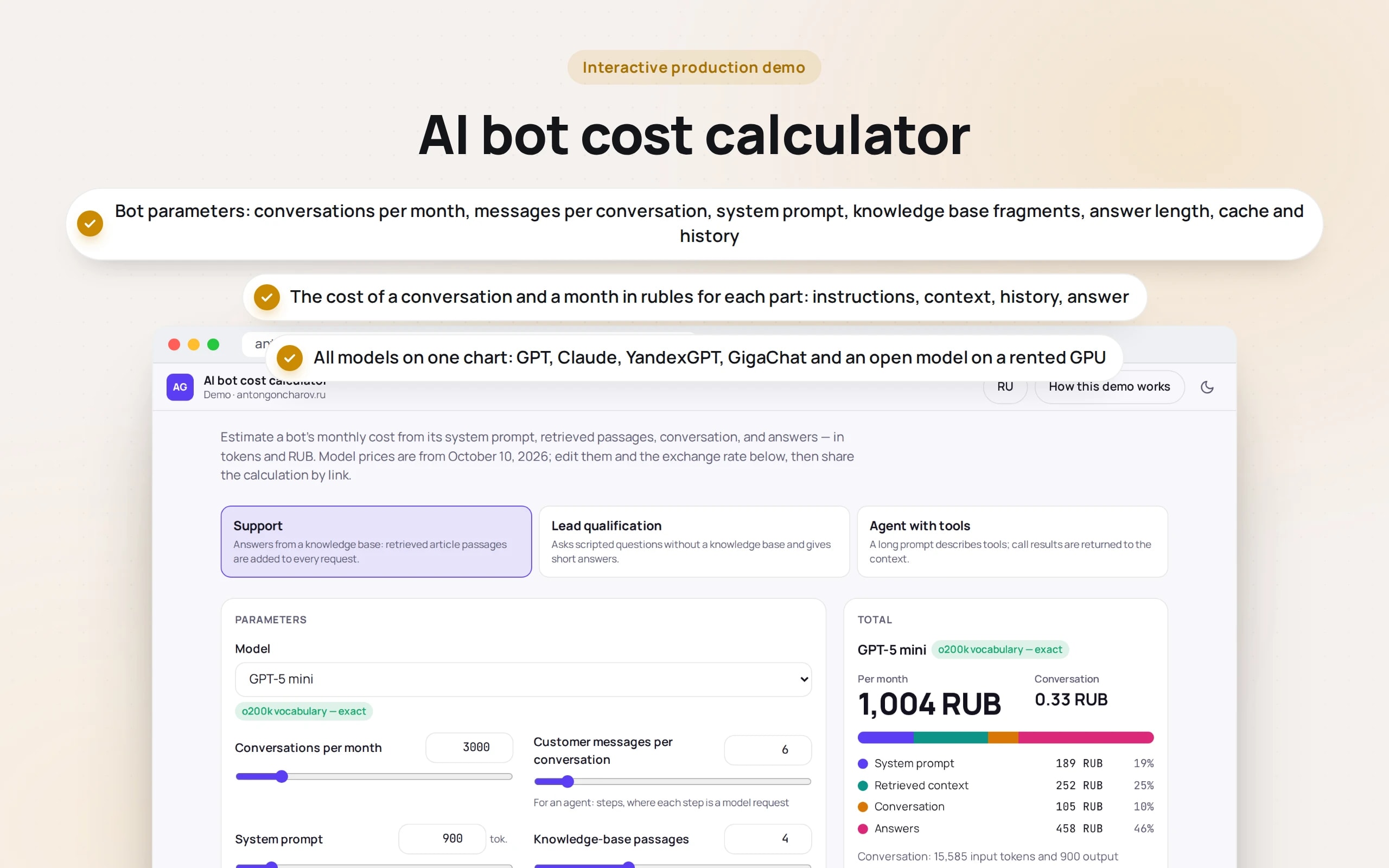
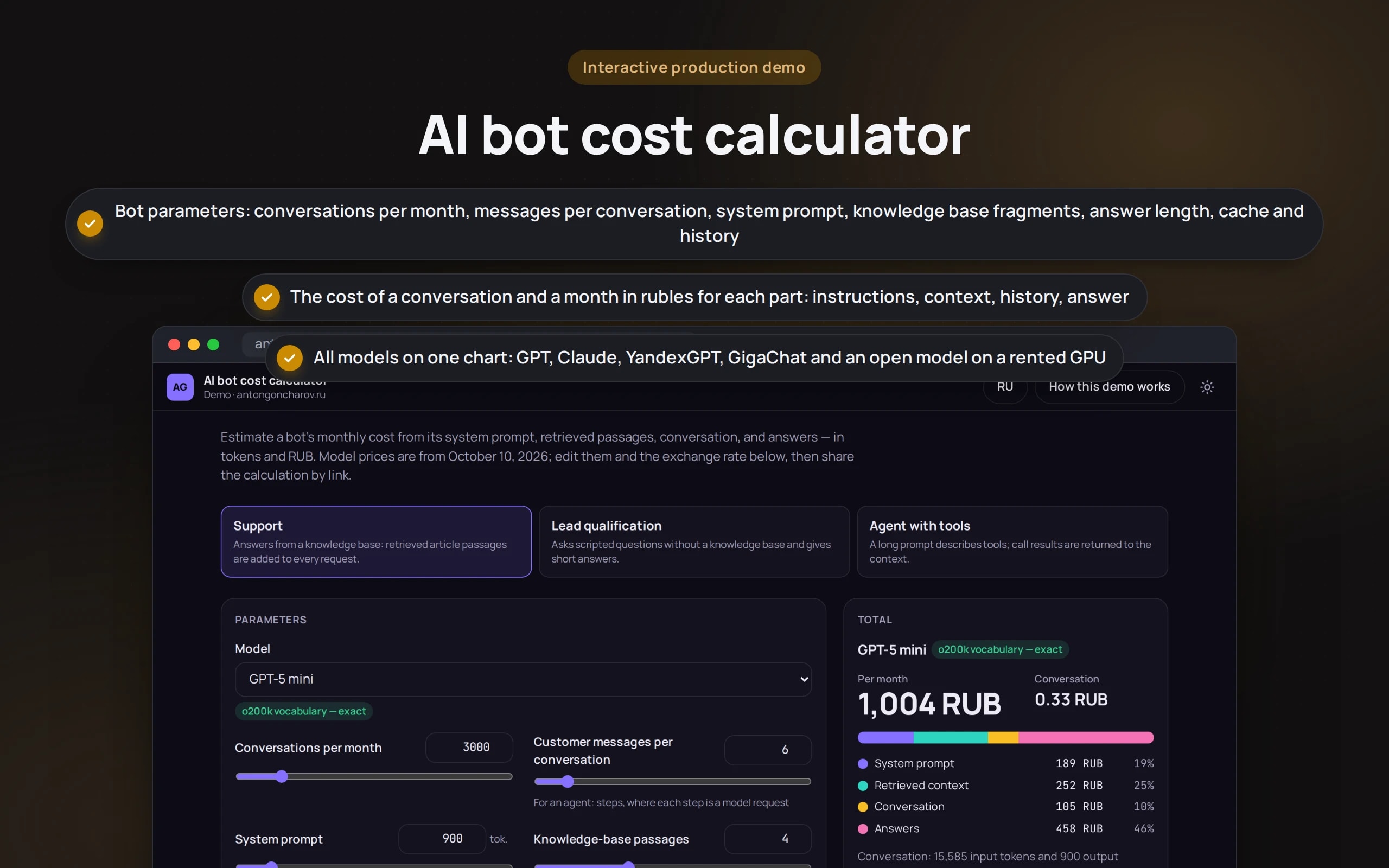
The calculation shows what the context is made of — instructions, knowledge base fragments, history, answer — and what each part costs in tokens.
More on the shelf
Reading
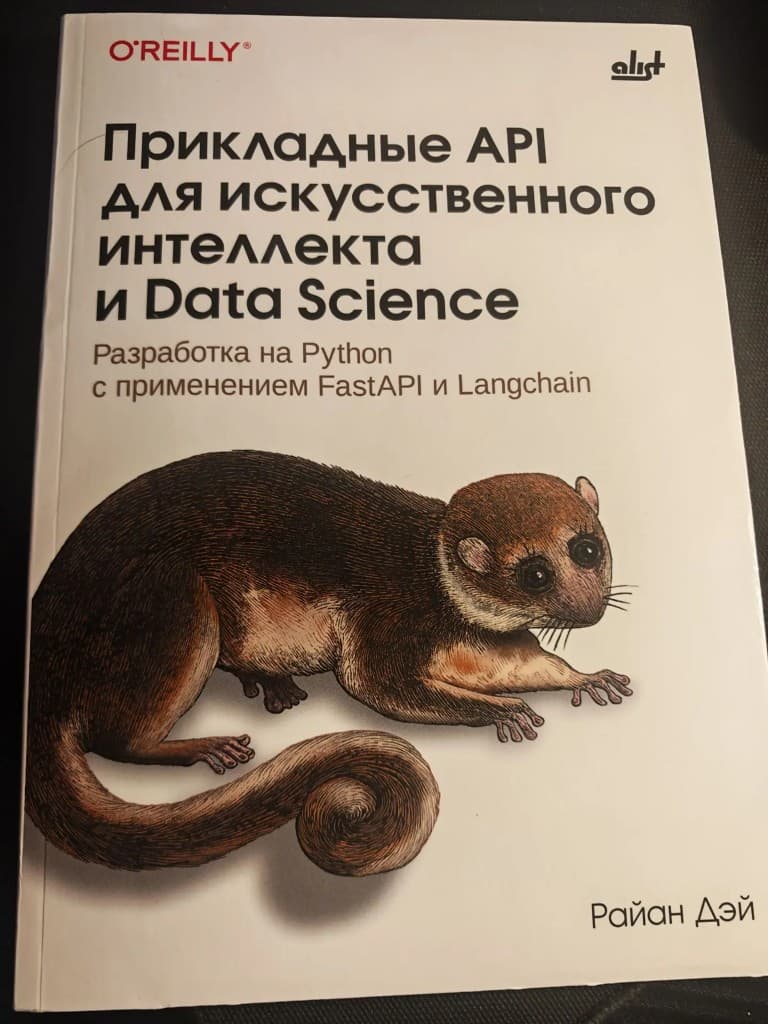
Hands-On APIs for AI and Data Science
Ryan Day
A practical book on building an API for data and connecting AI to it. The running project is a FastAPI service with a database and documentation, then an SDK for it, using the API in analytics and, finally, LangChain agents that call the API themselves.
AI and agentsPythonAPIApplied in 3 projectsReading
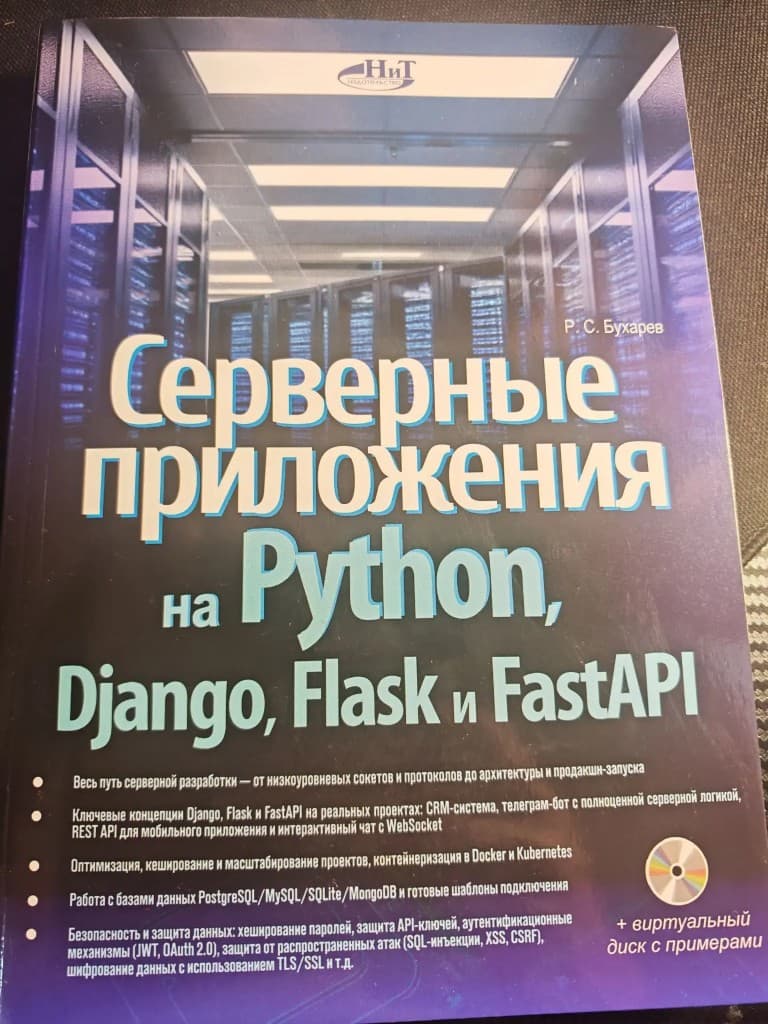
Server Applications in Python, Django, Flask and FastAPI
R. S. Bukharev
The path of server-side development in Python, from sockets and protocols to architecture and launch on a server. Django, Flask and FastAPI are covered through real projects: a CRM system, a Telegram bot with server-side logic, a REST API for a mobile app and a WebSocket chat. Separate chapters cover caching and scaling, Docker and Kubernetes, PostgreSQL, MySQL, SQLite and MongoDB, and security: password hashing, JWT and OAuth 2.0, protection against SQL injection, XSS and CSRF, TLS.
ProgrammingPythonBackendApplied in 1 project