What the Bleep Do We Know!?
William Arntz, Betsy Chasse, Mark Vicente
- Philosophy
- Thinking
A book based on the film What the Bleep Do We Know!?: physicists, neuroscientists and spiritual teachers reflect on quantum physics, the workings of the brain and the perception of reality. The main question is how far our view of the world is determined by habits of thinking and whether it can be changed.
Key ideas
- The brain sees the world through the filter of past experience, not as it is.
- Repeated thoughts and emotions become fixed in neural connections and turn into habits.
- Questions are more useful than ready answers: doubt is the beginning of a new view.
Where and how I applied it
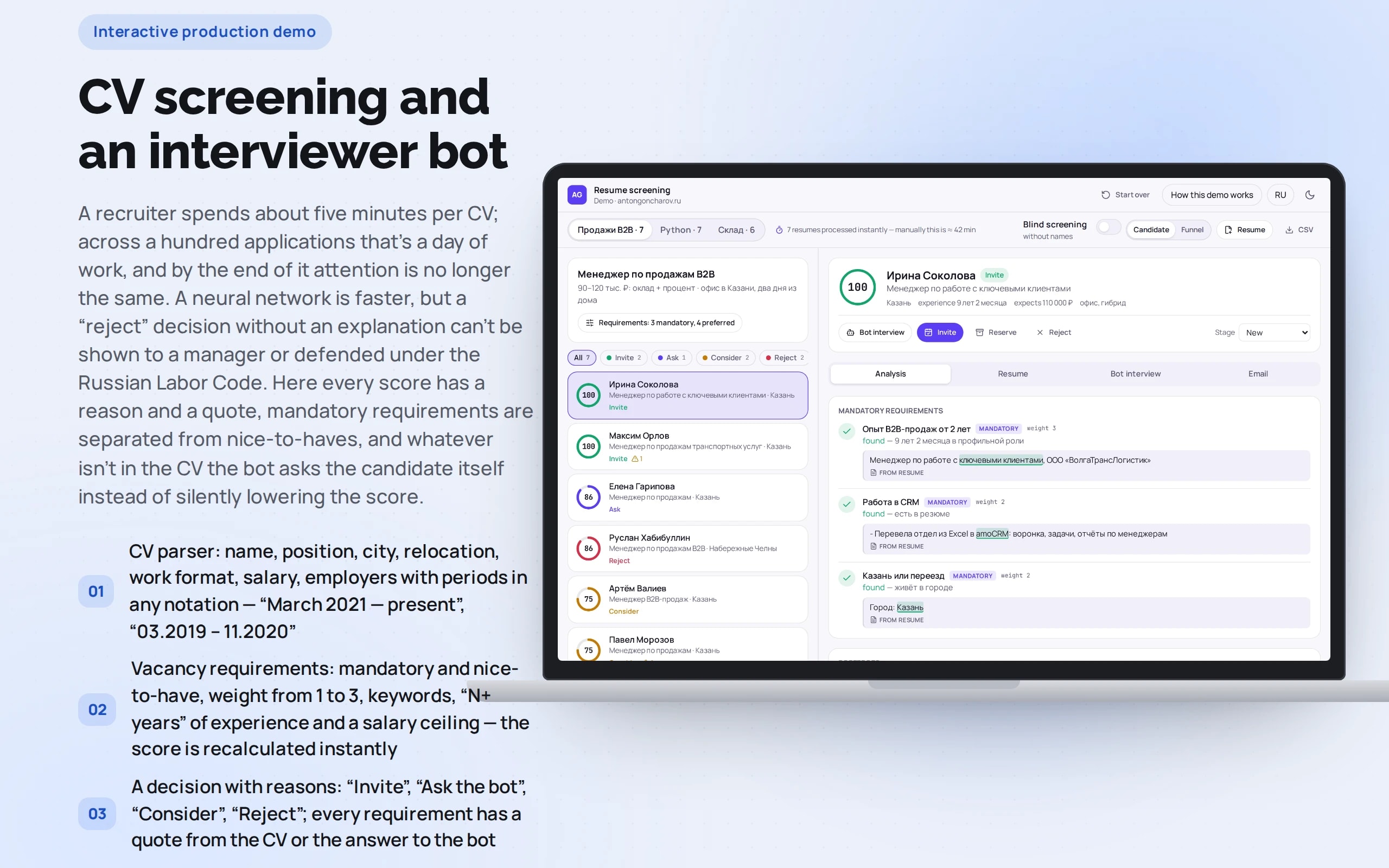
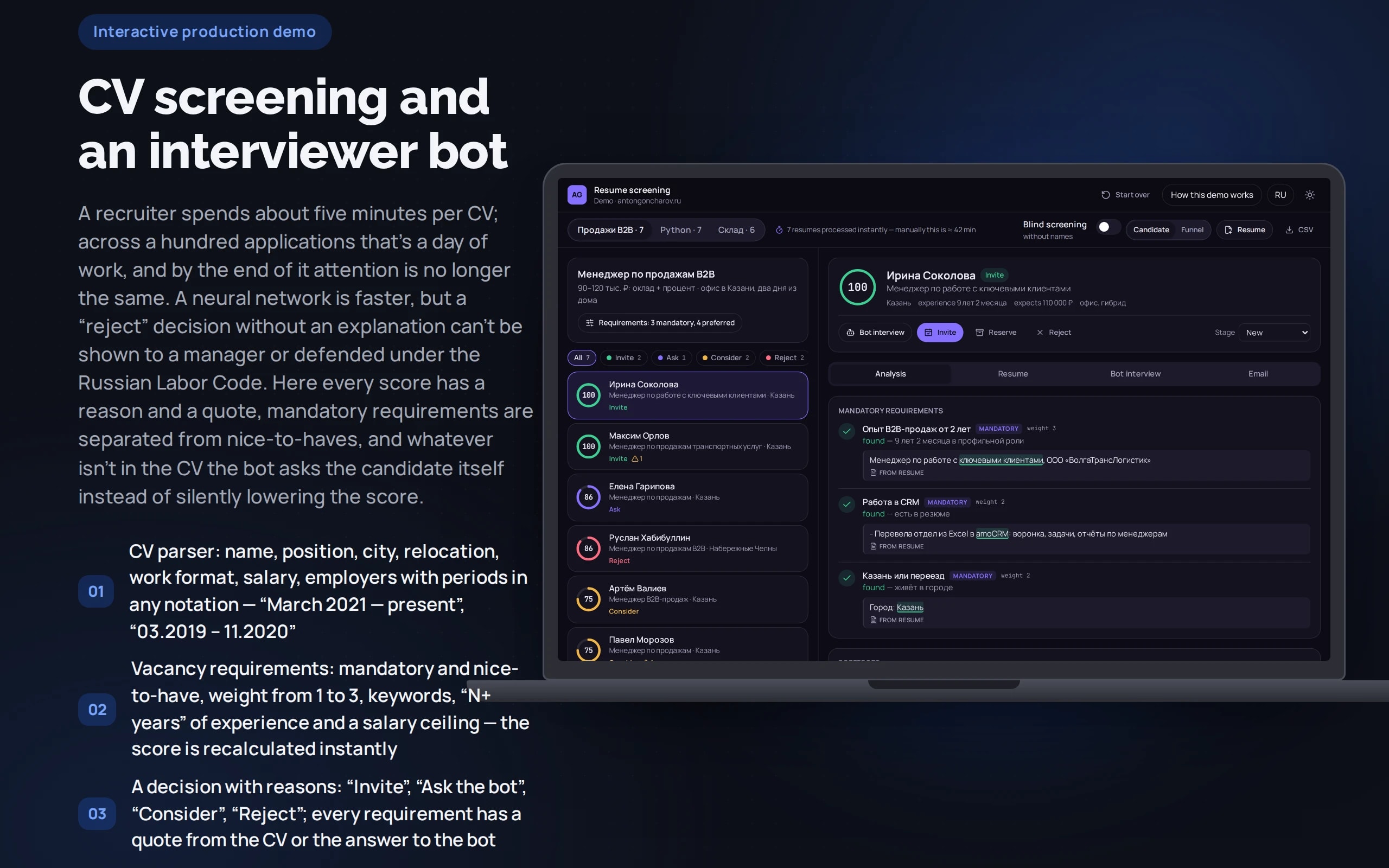
Demo · Web app · HR · scoring and chatbot
CV screening and an interviewer bot
Gender, age and marital status are cut from the résumé before scoring: the decision follows the job requirements, not the filter of habitual assumptions.
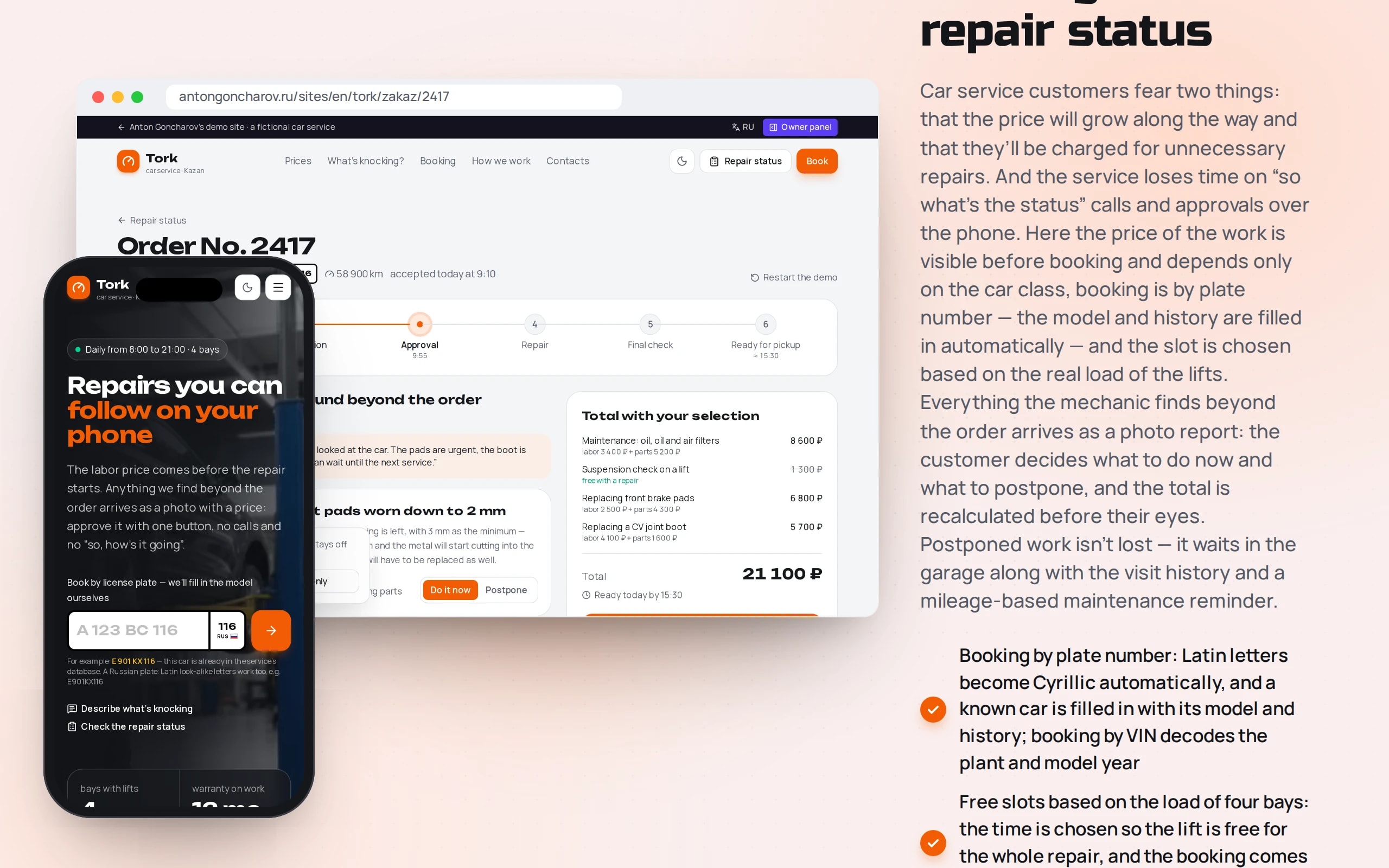
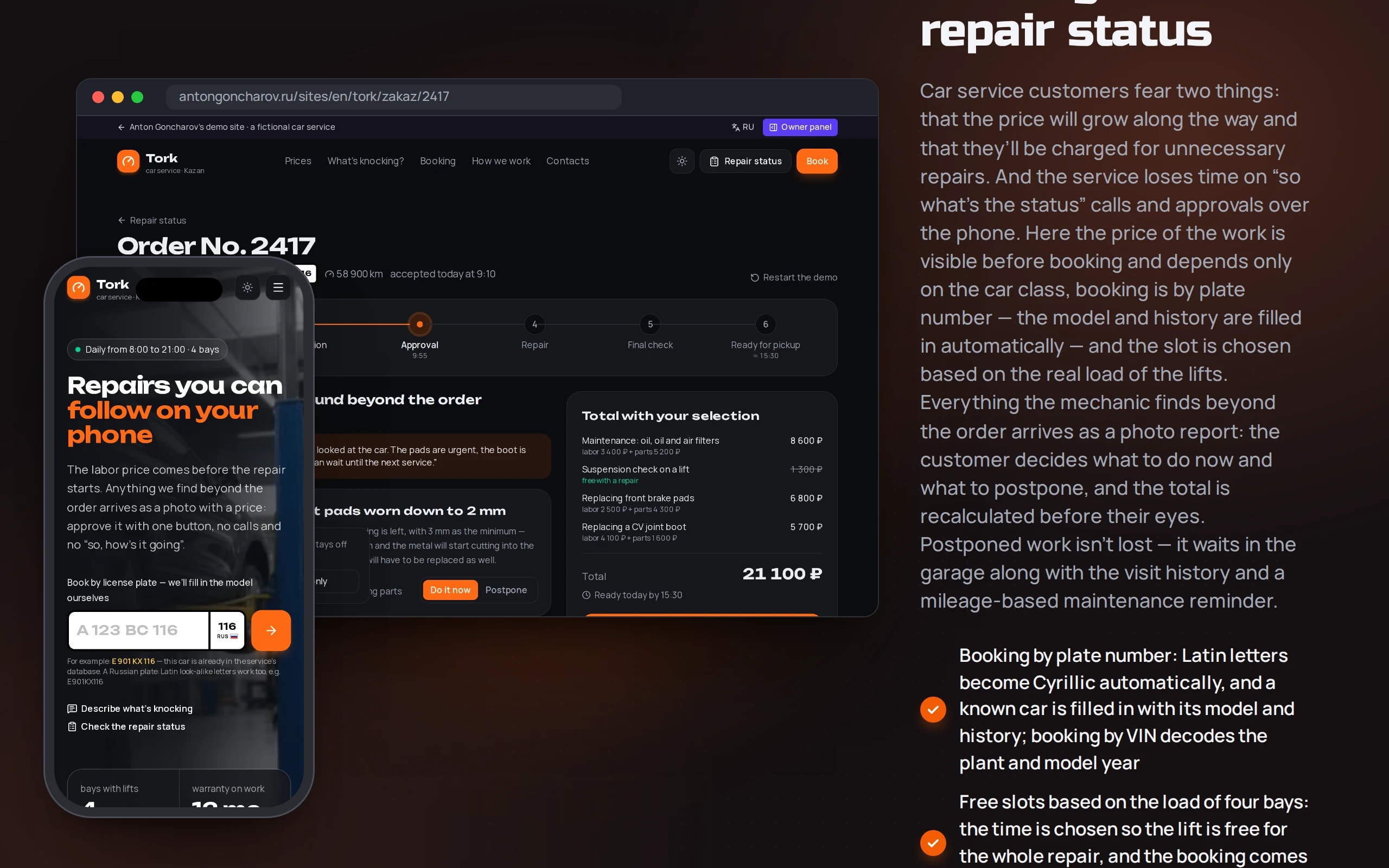
Demo · Next.js website · booking by plate number, photo report, approval
Car service with booking and repair status
In the “What’s that knocking?” check the site asks a clarifying question — “when does it happen?” — instead of giving a ready answer right away, and accuracy goes up.
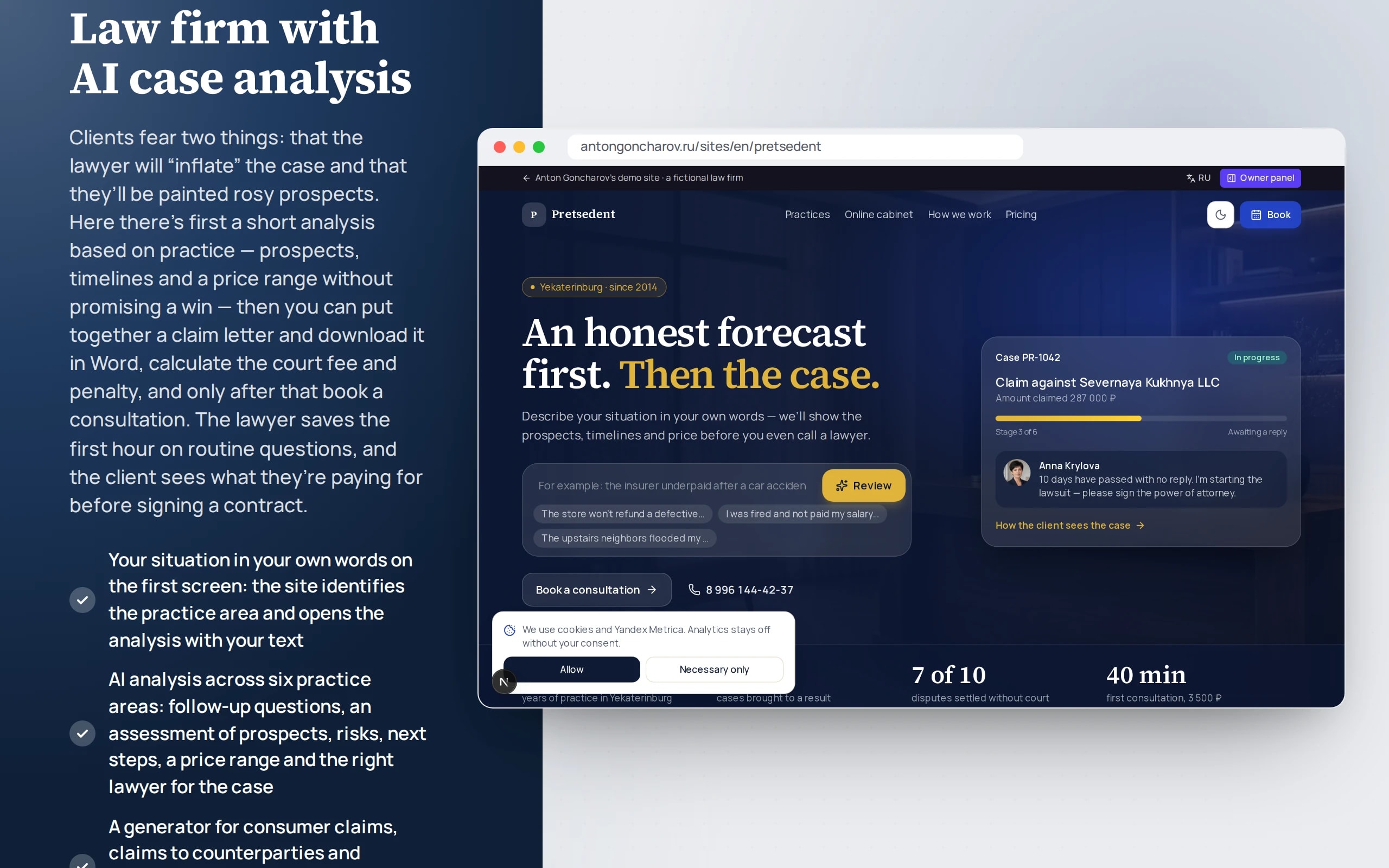
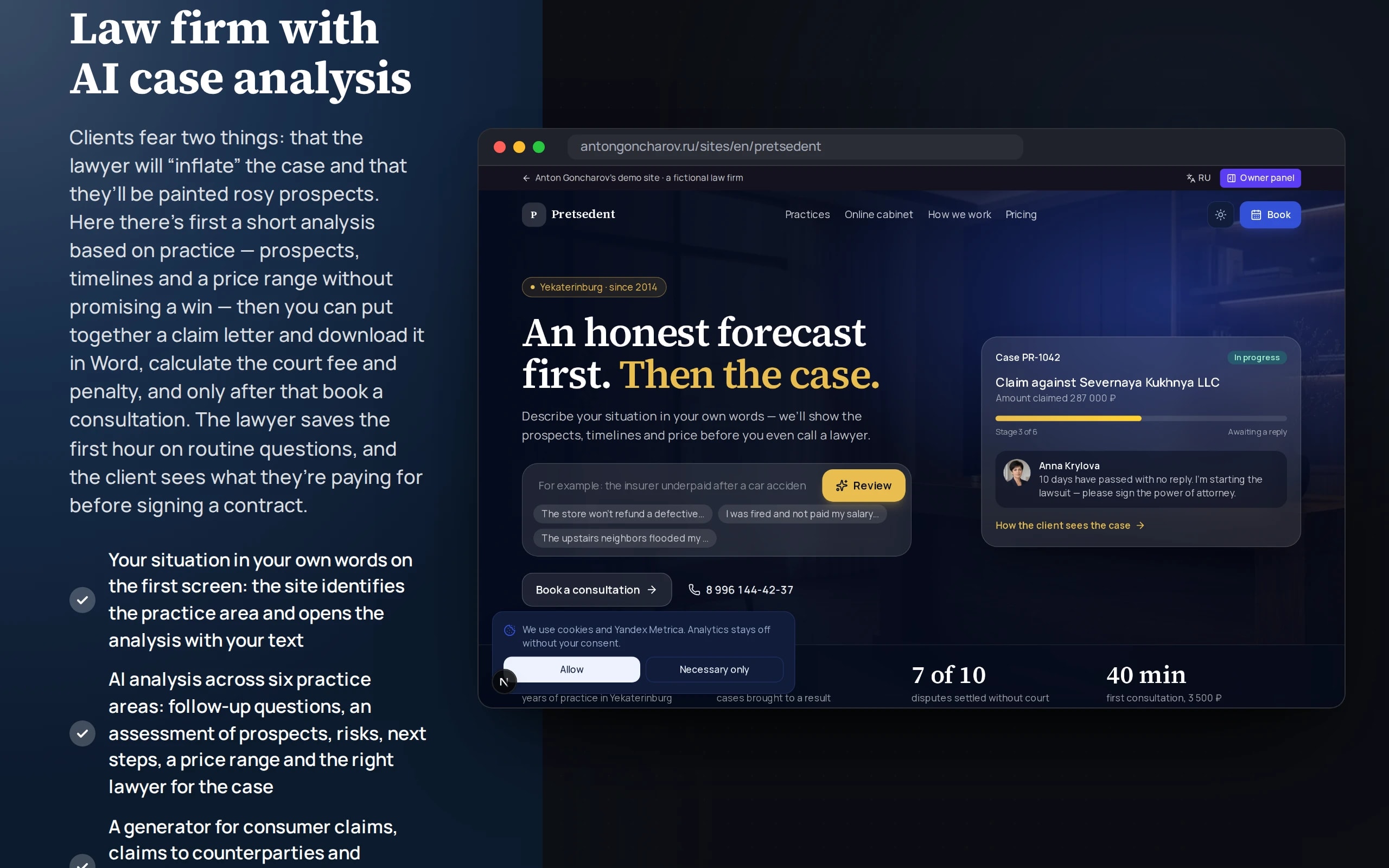
Demo · Next.js website · case analysis, claim letters, calculators
Law firm with AI case analysis
The AI case review starts with clarifying questions, not with a ready verdict.
More on the shelf
Reading
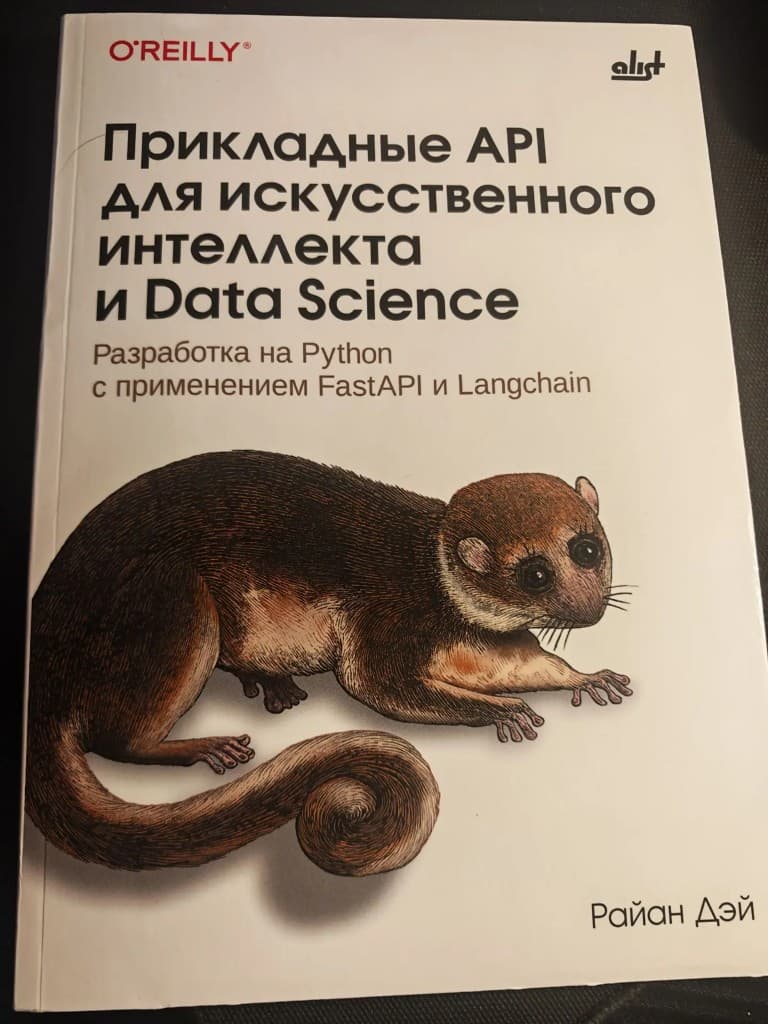
Hands-On APIs for AI and Data Science
Ryan Day
A practical book on building an API for data and connecting AI to it. The running project is a FastAPI service with a database and documentation, then an SDK for it, using the API in analytics and, finally, LangChain agents that call the API themselves.
AI and agentsPythonAPIApplied in 3 projectsReading
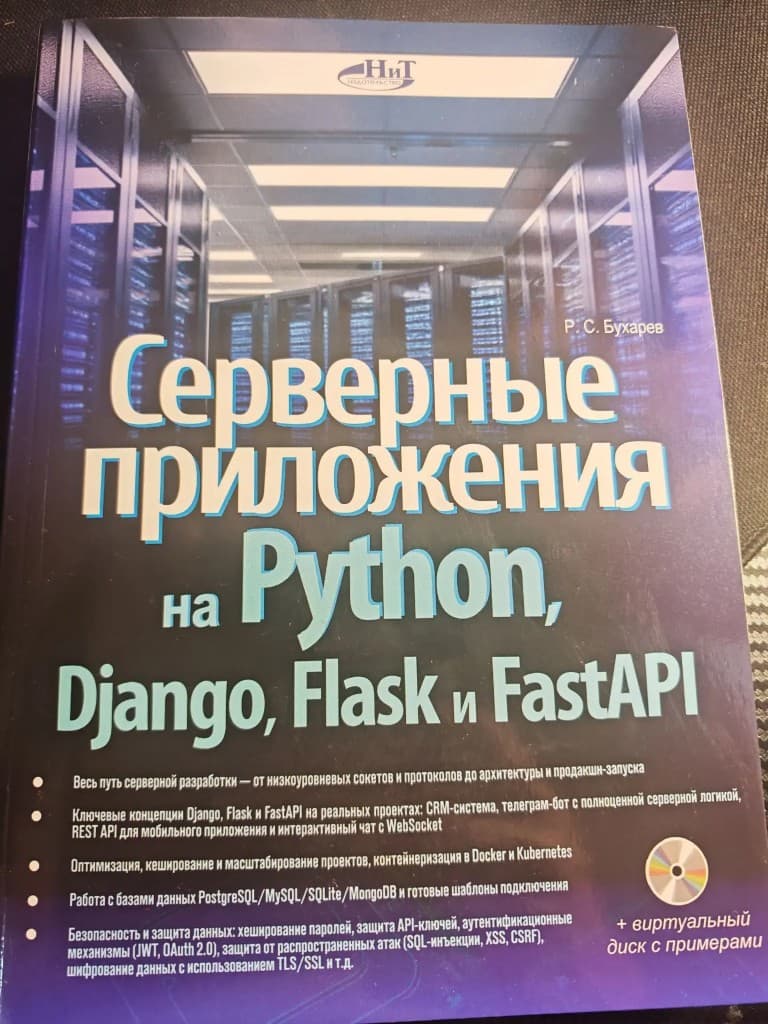
Server Applications in Python, Django, Flask and FastAPI
R. S. Bukharev
The path of server-side development in Python, from sockets and protocols to architecture and launch on a server. Django, Flask and FastAPI are covered through real projects: a CRM system, a Telegram bot with server-side logic, a REST API for a mobile app and a WebSocket chat. Separate chapters cover caching and scaling, Docker and Kubernetes, PostgreSQL, MySQL, SQLite and MongoDB, and security: password hashing, JWT and OAuth 2.0, protection against SQL injection, XSS and CSRF, TLS.
ProgrammingPythonBackendApplied in 1 project