Computer Data-Base Organization
James Martin
- Databases
A 1970s classic on how databases work inside. Martin separates the logical organization of data — how programs see it — from the physical — how it lies on disk — and covers hierarchical, network and relational structures, indexes, hashing, inverted files and data protection.
Key ideas
- The logical schema and physical storage are different levels, and changing one without breaking the other is the main goal of a DBMS.
- The access method is chosen by the queries: sequential, indexed or hashed.
- An inverted file is the basis for searching by any field, not just by key.
- Data outlives programs, so the schema is designed for the whole organization, not for one application.
Where and how I applied it
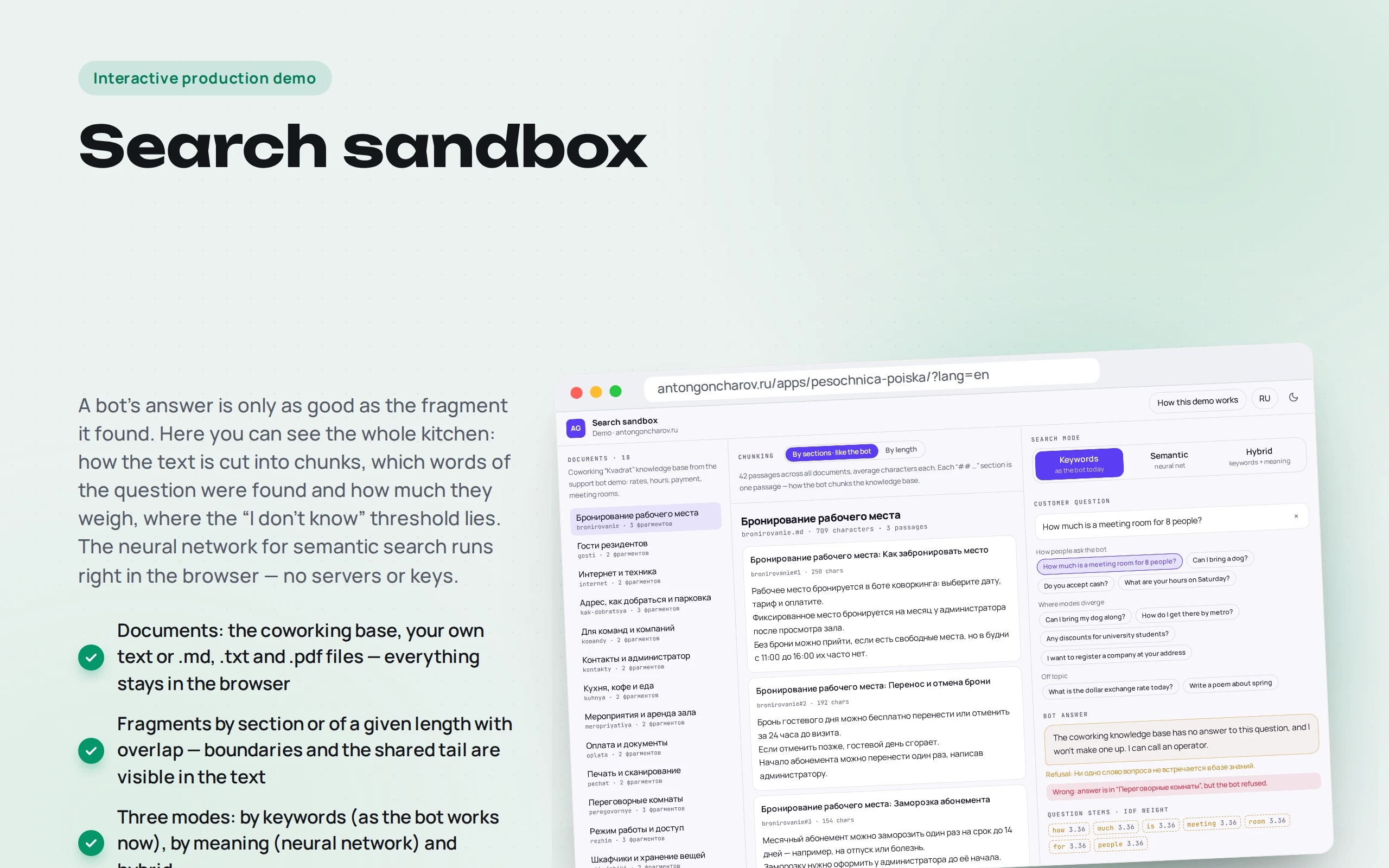
Demo · Web app · RAG · neural network in the browser
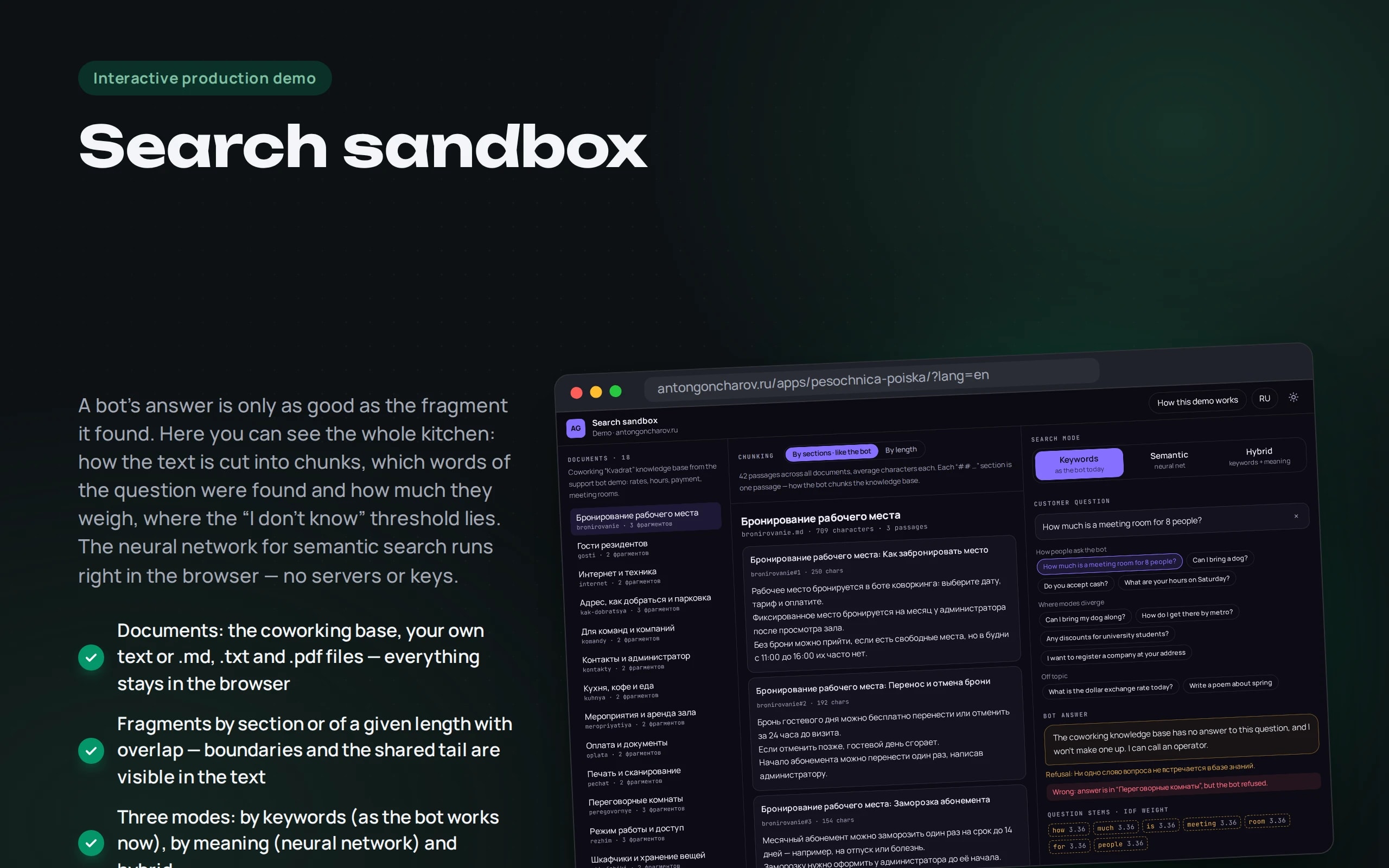
Search sandbox
BM25 keyword search follows the inverted file principle: from a word to the fragments where it occurs, not a scan of all the text.
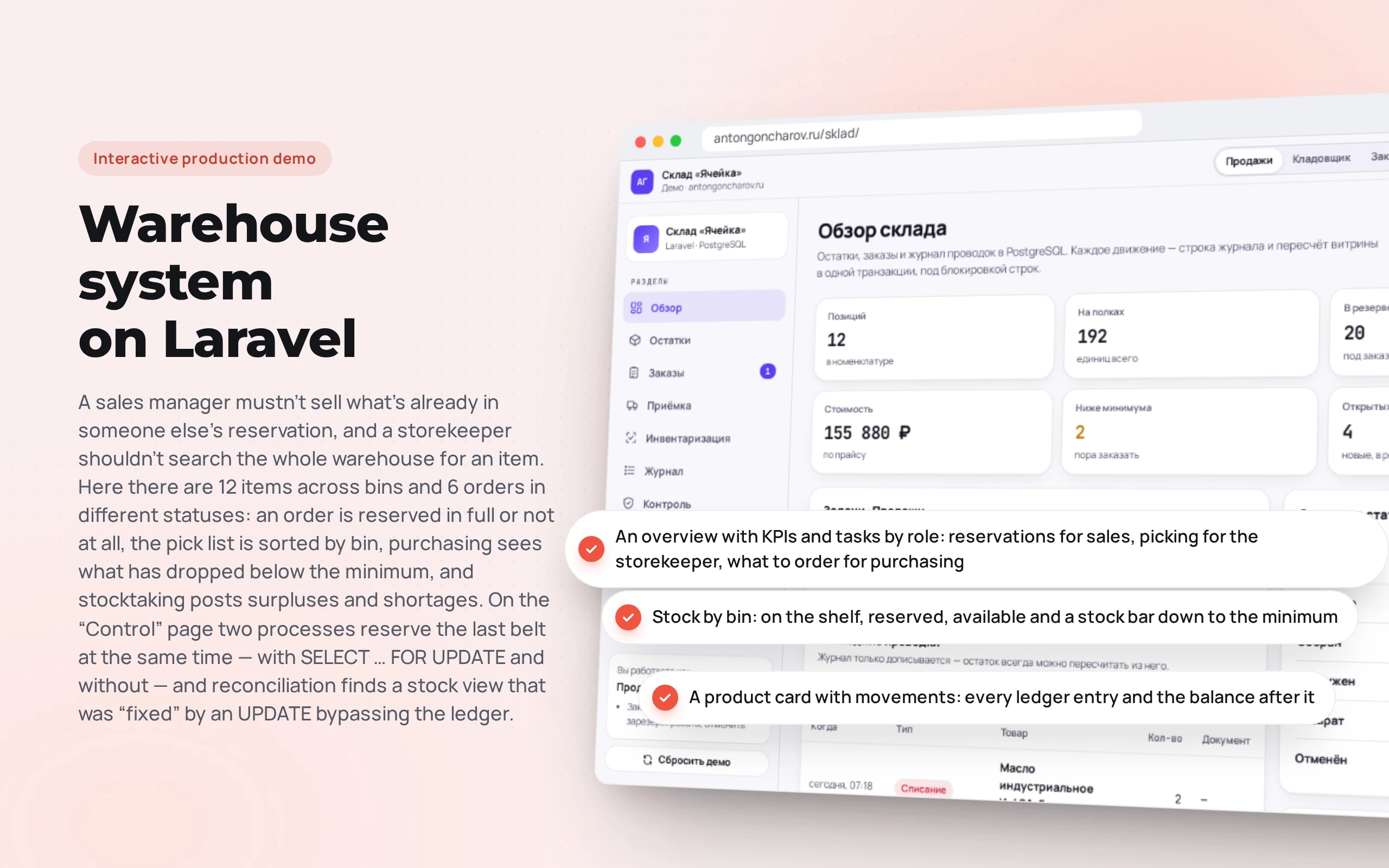
Demo · Web app · Laravel · PostgreSQL
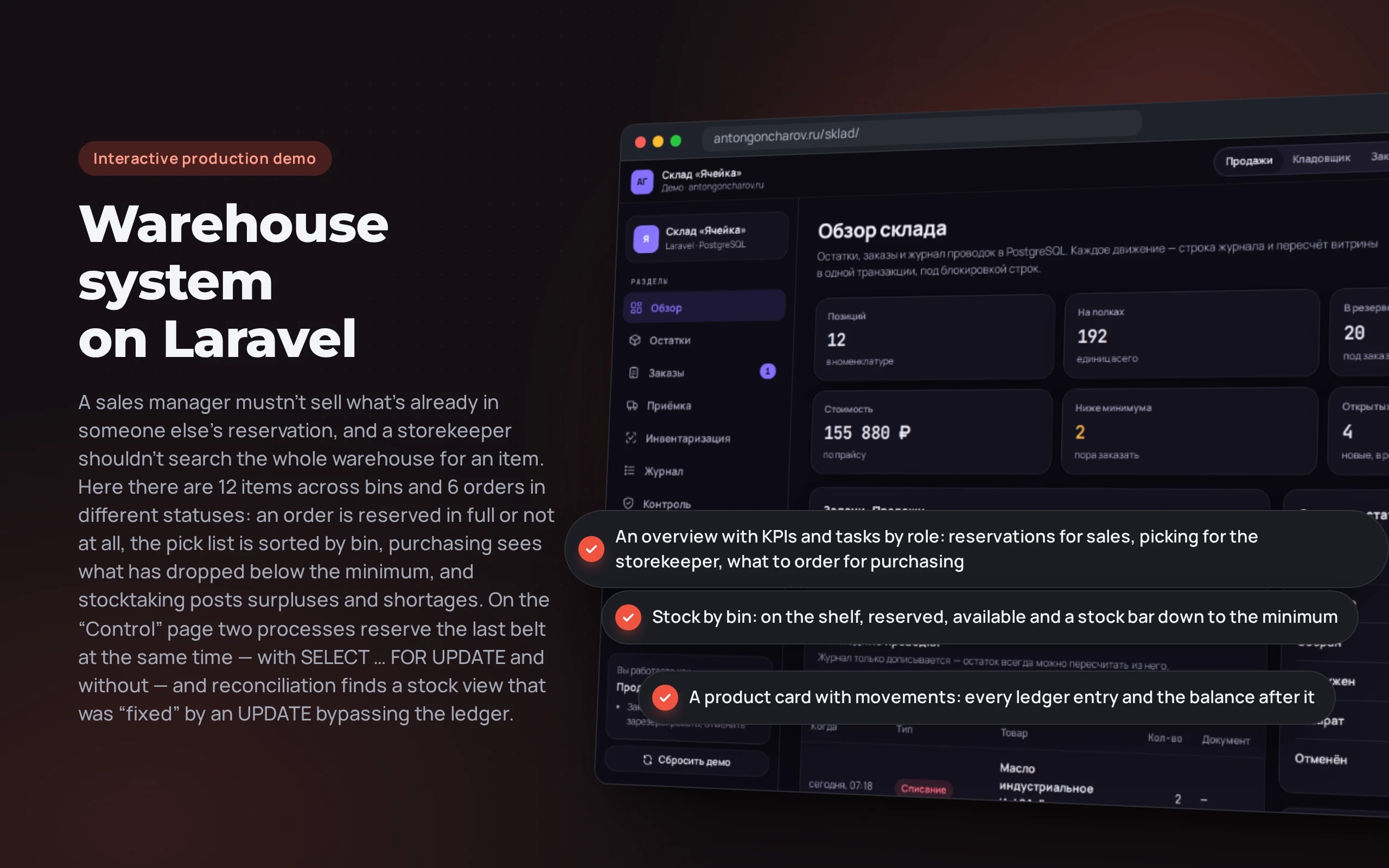
Warehouse system on Laravel
Stock is the sum of postings, and the stock view is rebuilt from the journal: how users see the data is separate from how it is stored.
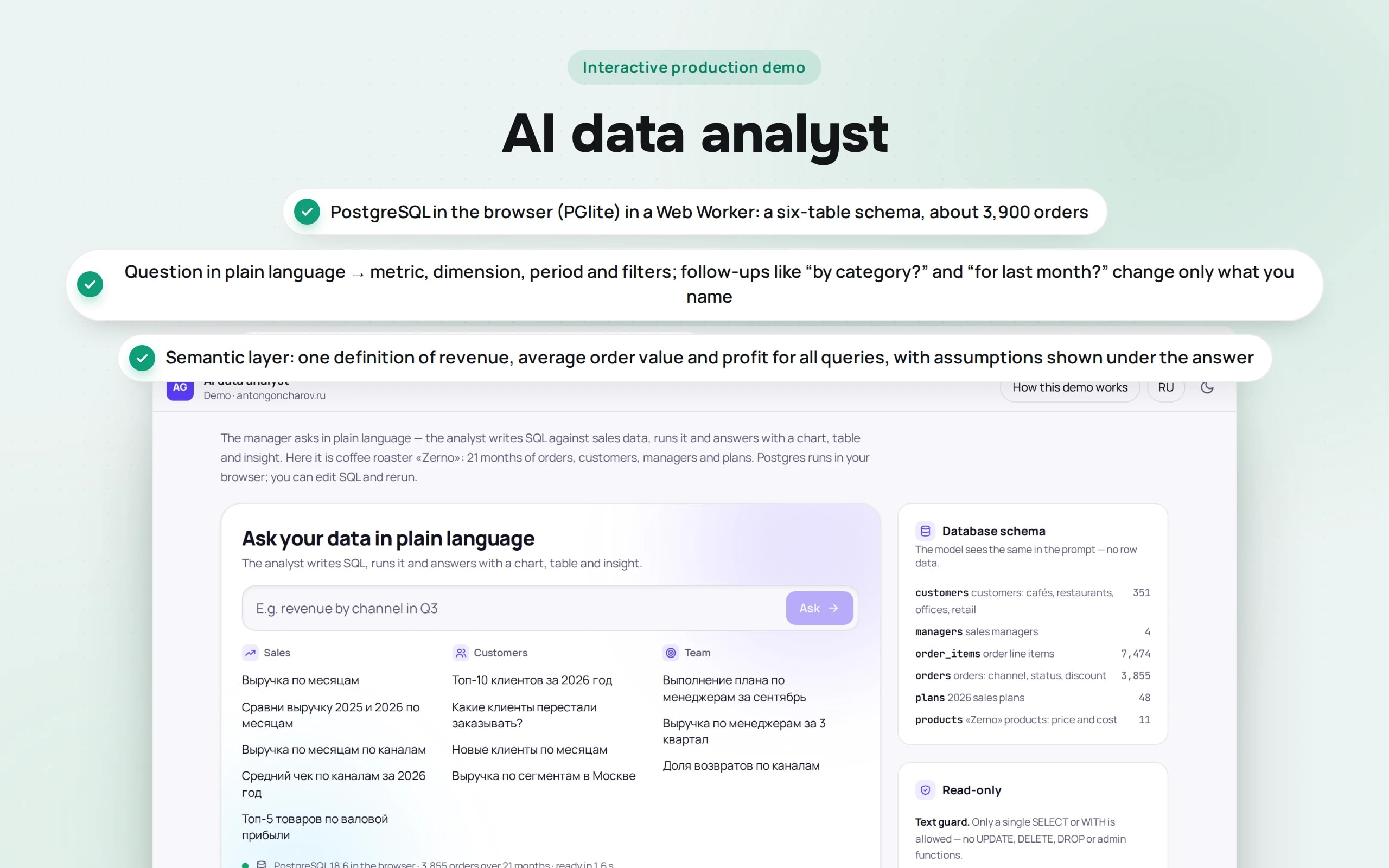
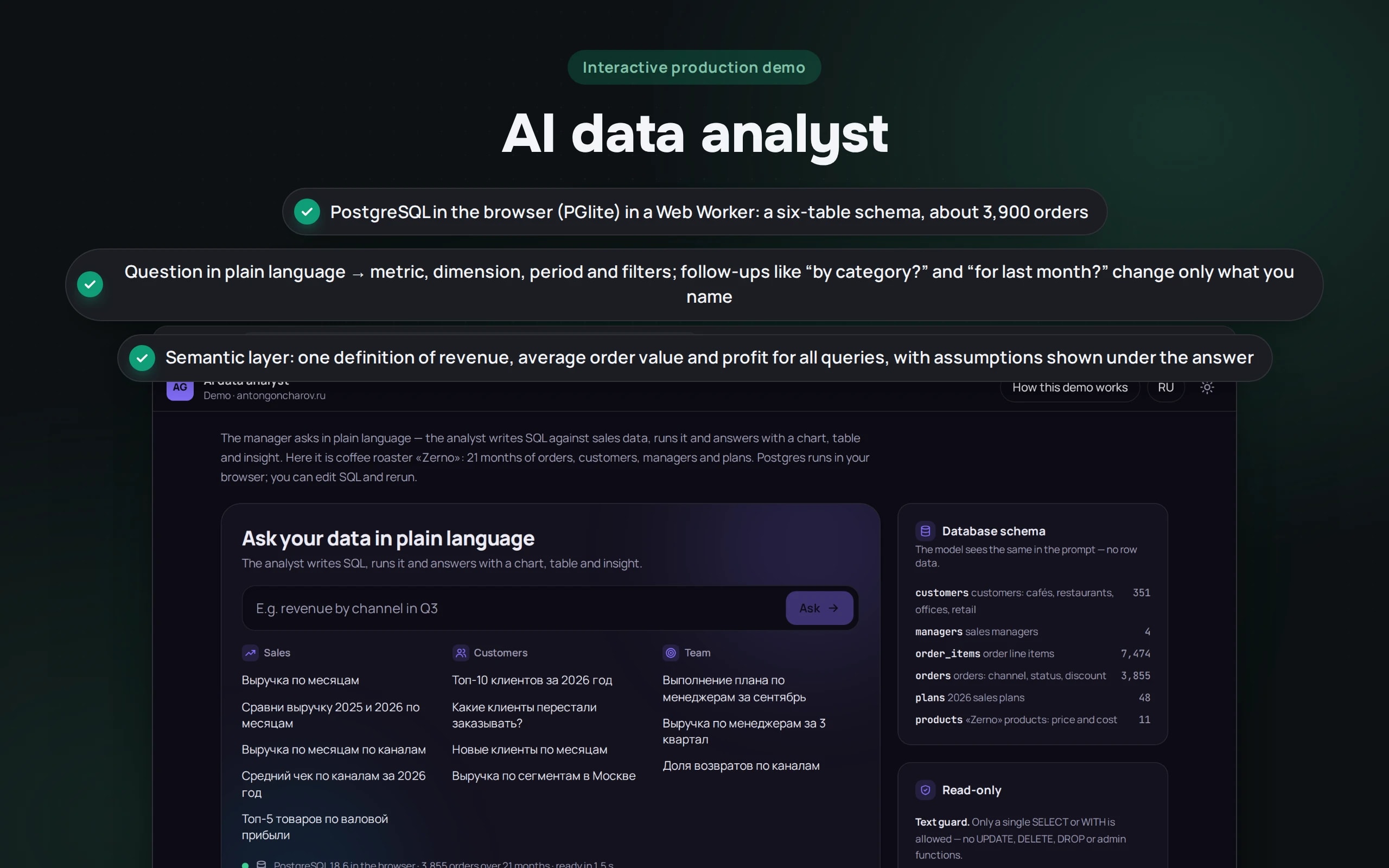
Demo · Web app · question → SQL → chart · PostgreSQL in the browser
AI data analyst
The semantic layer separates the manager’s concepts — revenue, average order value, profit — from the six-table schema.
More on the shelf
Reading
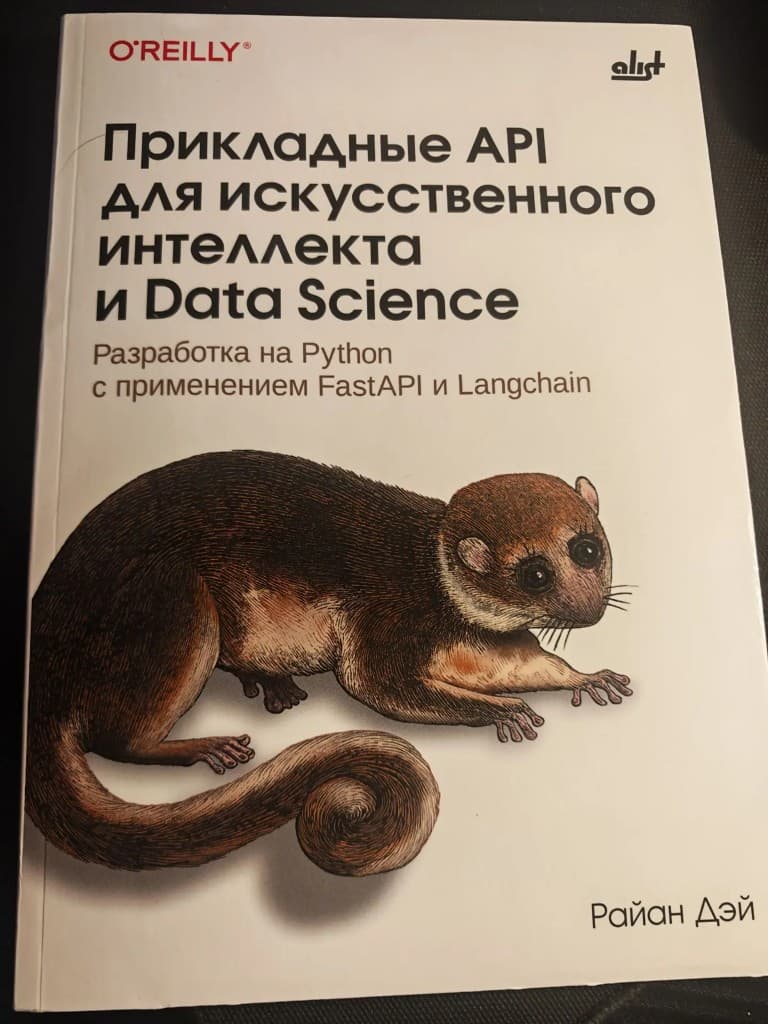
Hands-On APIs for AI and Data Science
Ryan Day
A practical book on building an API for data and connecting AI to it. The running project is a FastAPI service with a database and documentation, then an SDK for it, using the API in analytics and, finally, LangChain agents that call the API themselves.
AI and agentsPythonAPIApplied in 3 projectsReading
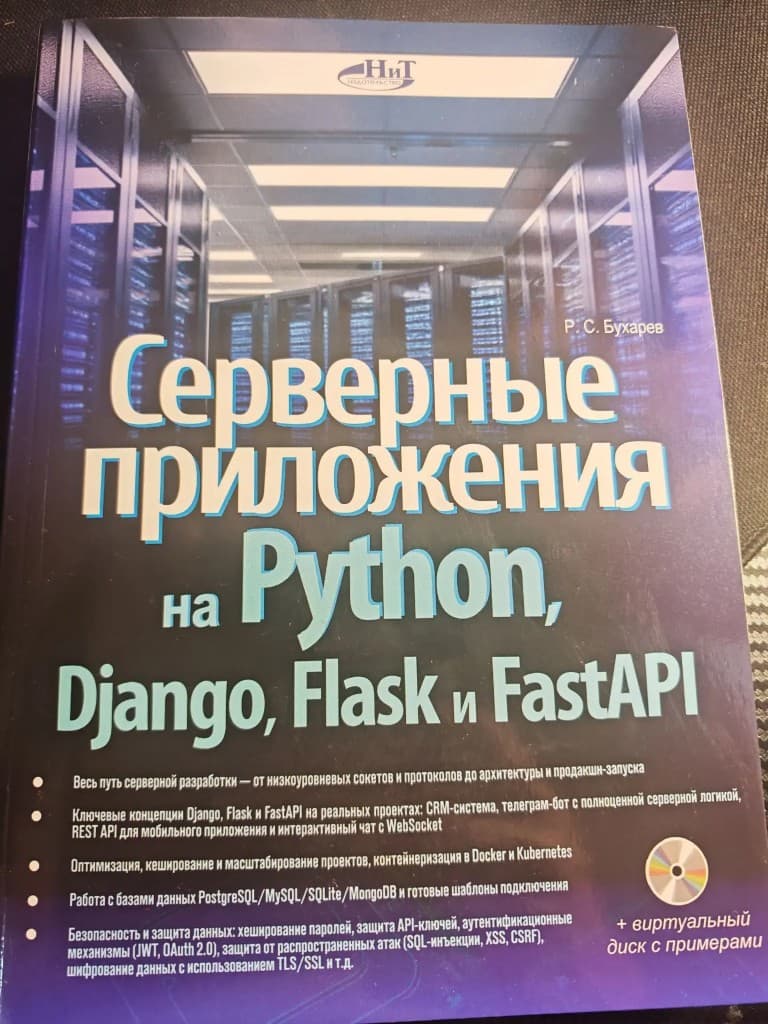
Server Applications in Python, Django, Flask and FastAPI
R. S. Bukharev
The path of server-side development in Python, from sockets and protocols to architecture and launch on a server. Django, Flask and FastAPI are covered through real projects: a CRM system, a Telegram bot with server-side logic, a REST API for a mobile app and a WebSocket chat. Separate chapters cover caching and scaling, Docker and Kubernetes, PostgreSQL, MySQL, SQLite and MongoDB, and security: password hashing, JWT and OAuth 2.0, protection against SQL injection, XSS and CSRF, TLS.
ProgrammingPythonBackendApplied in 1 project