Databases
CMC MSU
- Databases
- SQL
A discipline of the “AI Systems Developer” program at the Faculty of Computational Mathematics and Cybernetics of Moscow State University. Exam passed.
The course is about storing data reliably and finding it quickly: the relational model and SQL, schema design and normalization, indexes, transactions and concurrent access.
Key ideas
- A schema is designed from the domain and the queries, not from interface screens.
- Normalization removes duplication and update anomalies; denormalization is a deliberate trade-off for read speed.
- An index speeds up reads but slows down writes, so it’s created for specific queries.
- Transactions and isolation levels determine what concurrent users see and what survives a crash.
How I apply it
This site’s API runs on PostgreSQL with Alembic migrations; in RAG projects I do vector search in the same database with pgvector.
Where and how I applied it
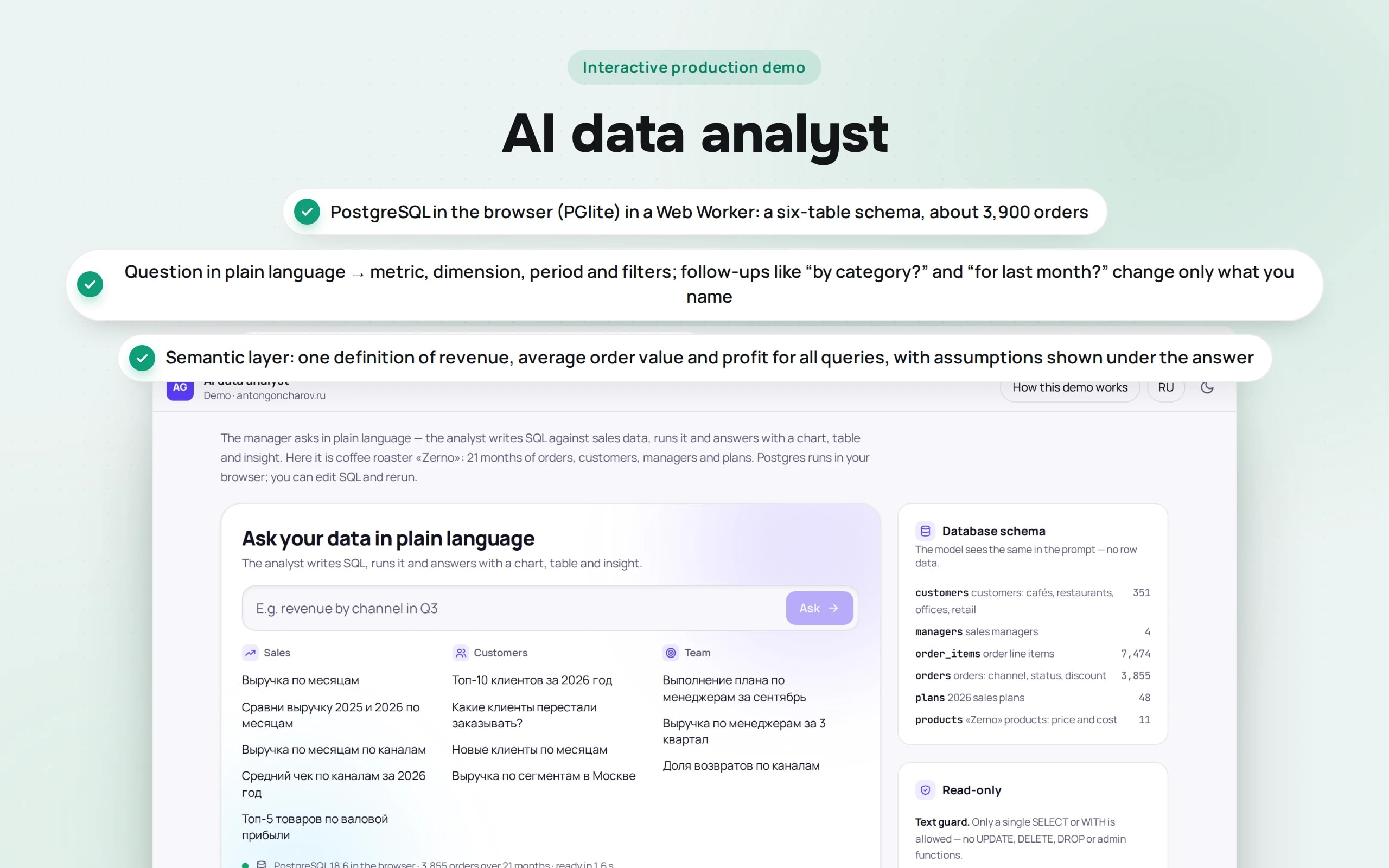
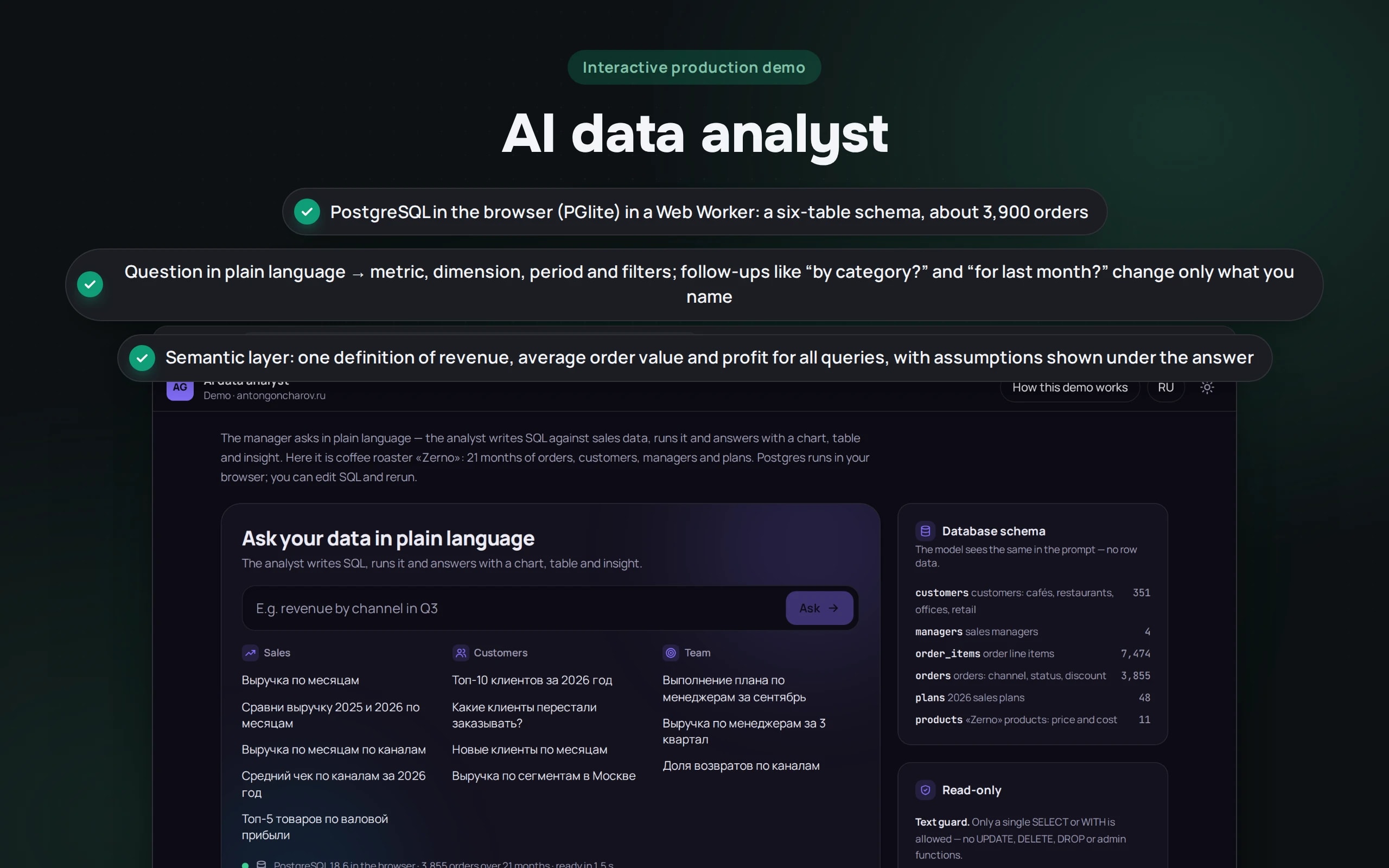
Demo · Web app · question → SQL → chart · PostgreSQL in the browser
AI data analyst
A real PostgreSQL in the browser: a six-table schema, queries only in a READ ONLY transaction, stopped after 5 seconds and capped at 1,000 rows.
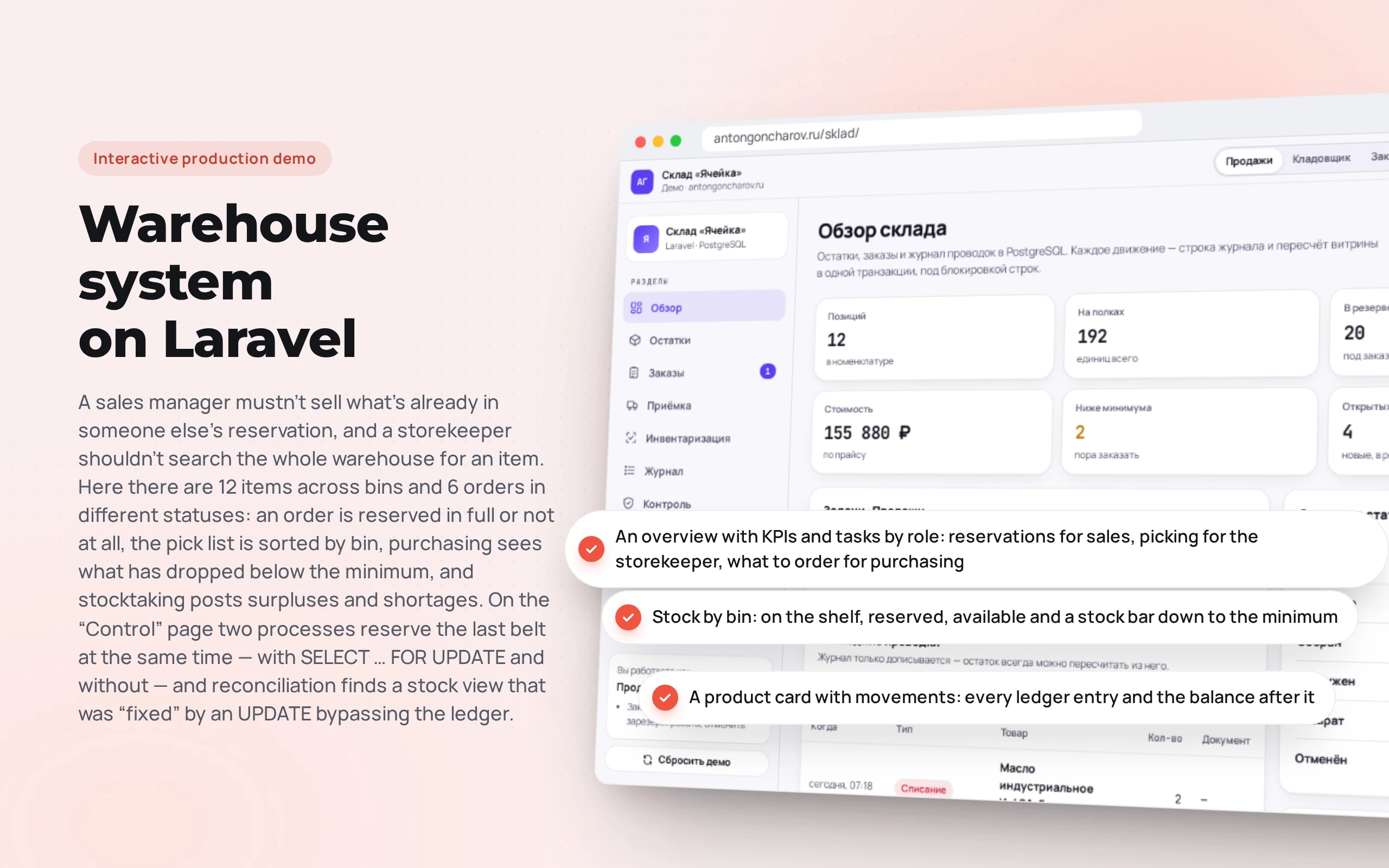
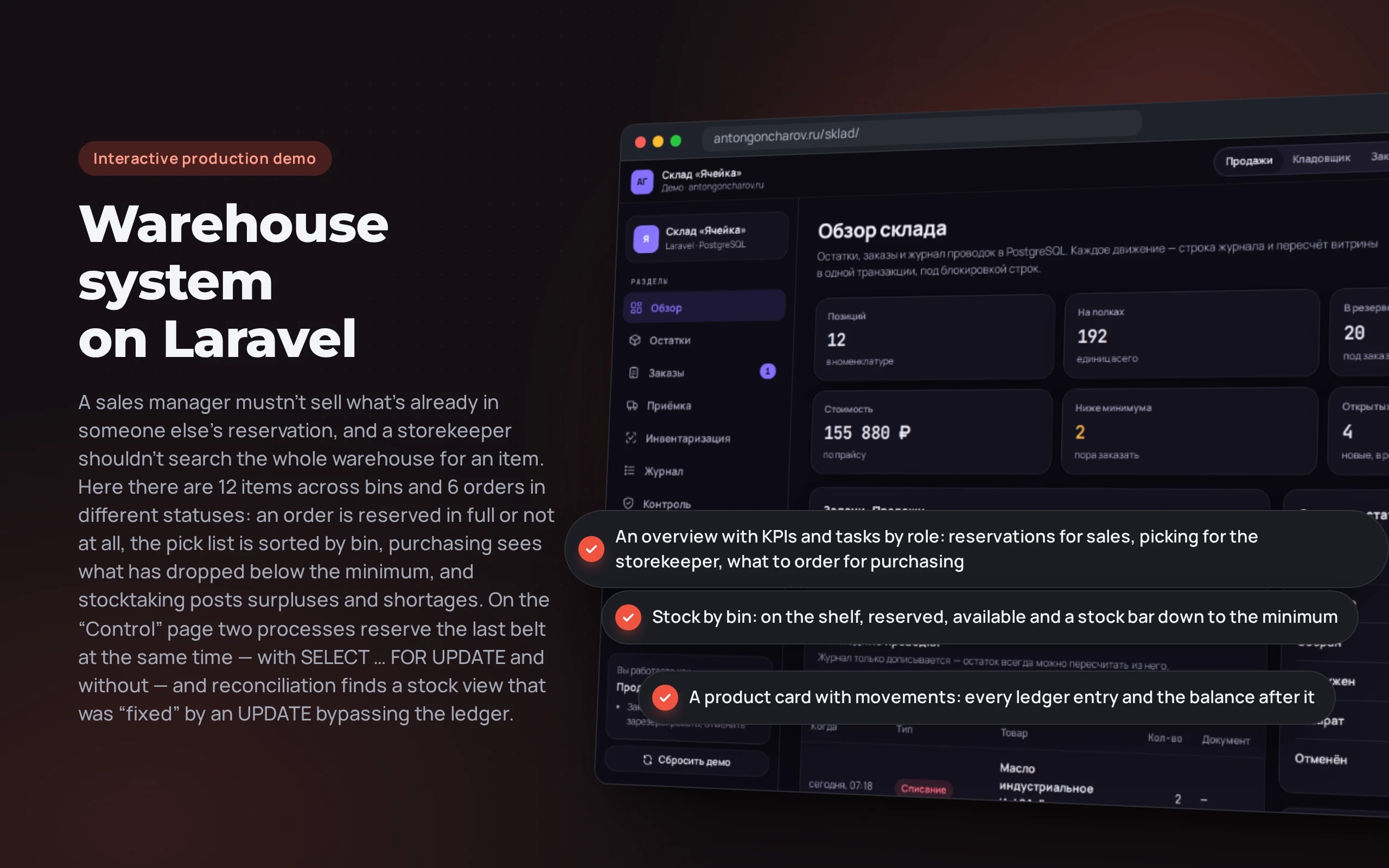
Demo · Web app · Laravel · PostgreSQL
Warehouse system on Laravel
Goods receipt as one transaction, all-or-nothing reservations and a row lock against stock races.
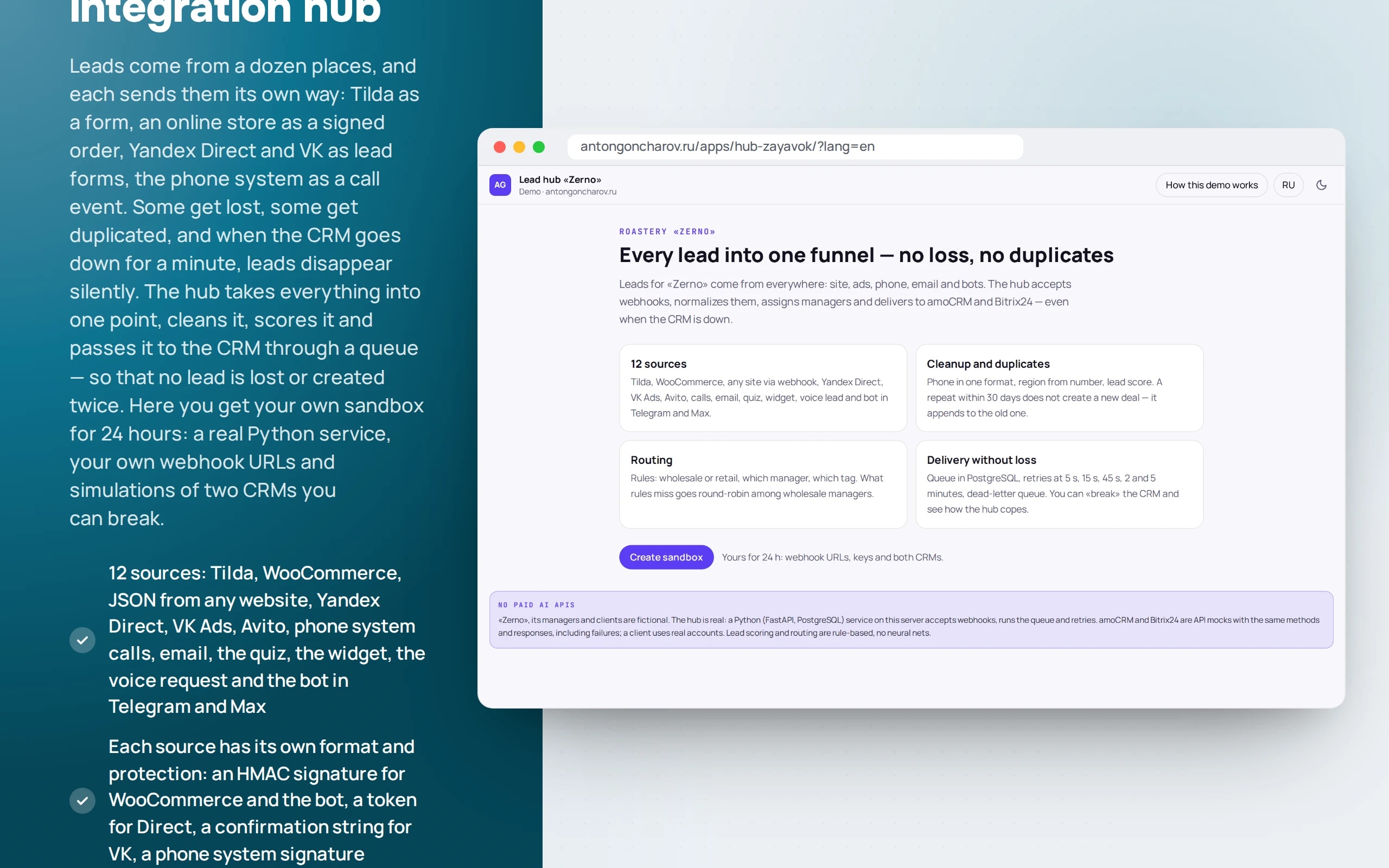
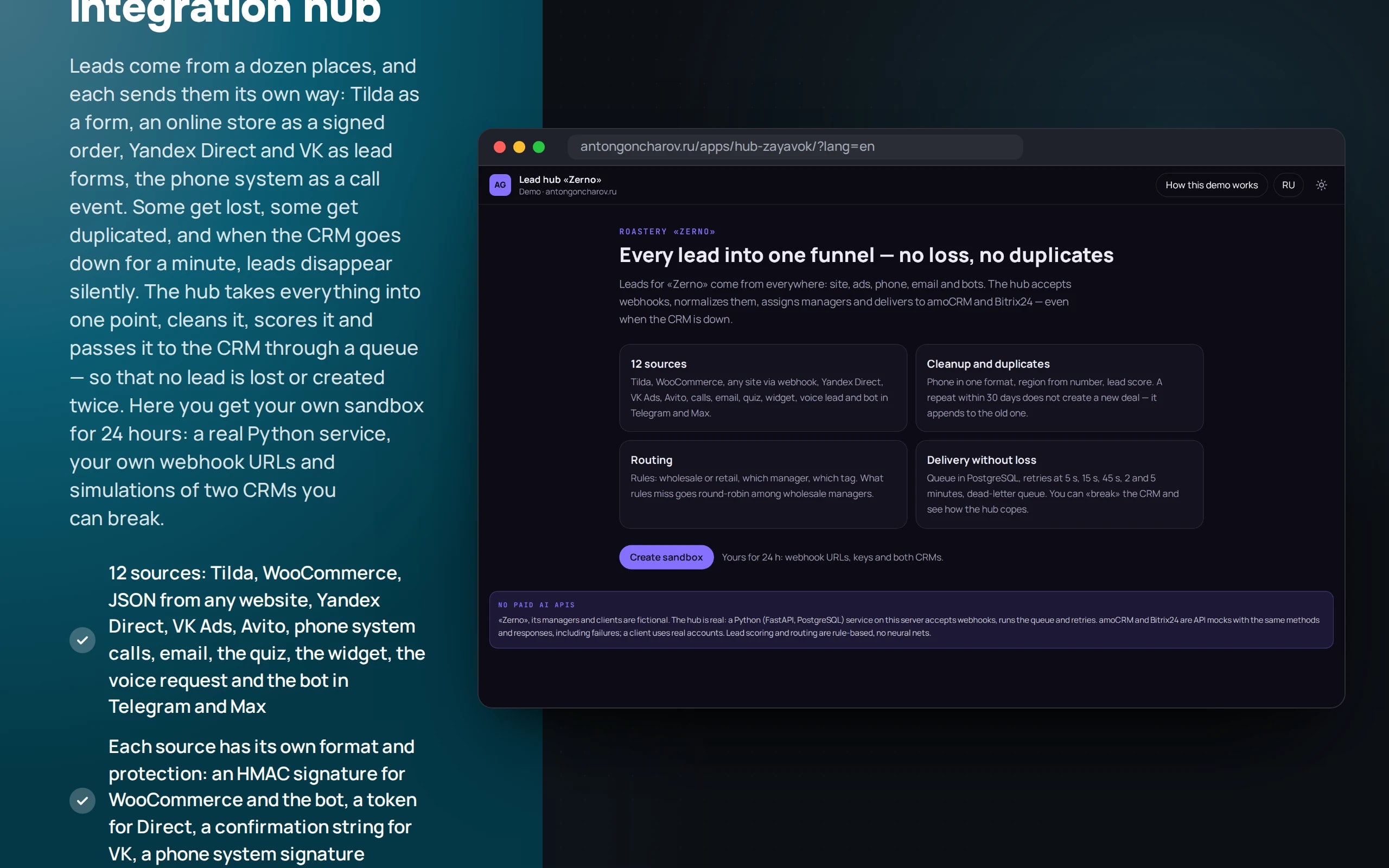
Demo · Python backend · webhooks → amoCRM and Bitrix24
Lead integration hub
A delivery queue in PostgreSQL on SELECT … FOR UPDATE SKIP LOCKED, Alembic migrations, a 30-day duplicate check.
More on the shelf
Reading
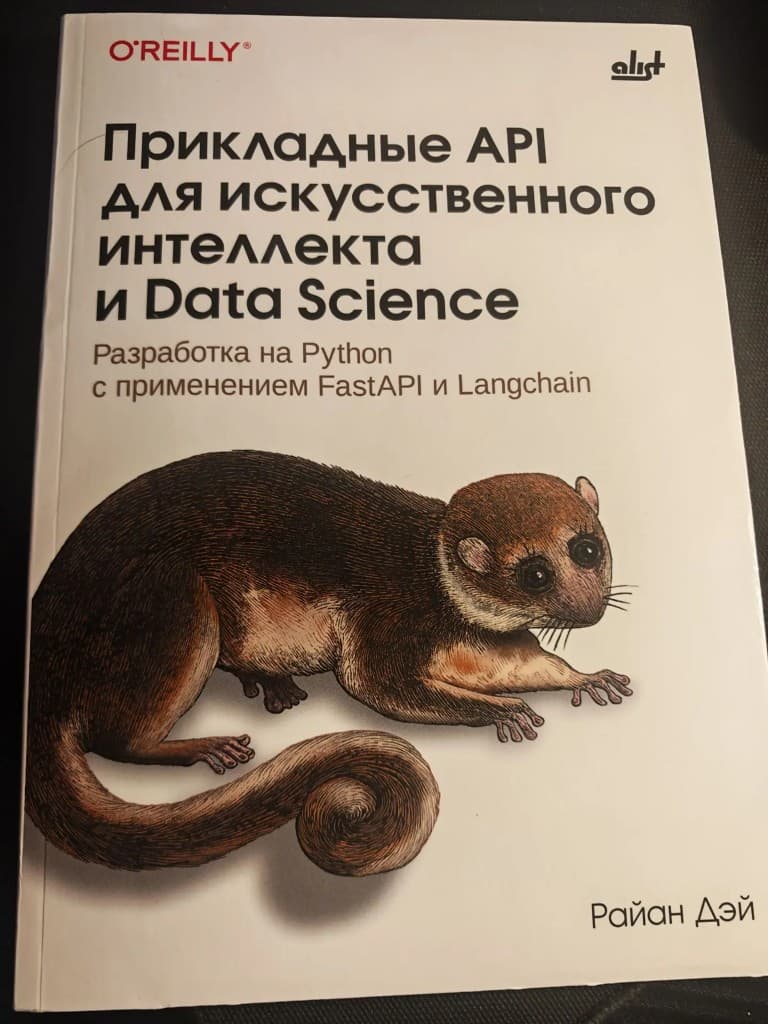
Hands-On APIs for AI and Data Science
Ryan Day
A practical book on building an API for data and connecting AI to it. The running project is a FastAPI service with a database and documentation, then an SDK for it, using the API in analytics and, finally, LangChain agents that call the API themselves.
AI and agentsPythonAPIApplied in 3 projectsReading
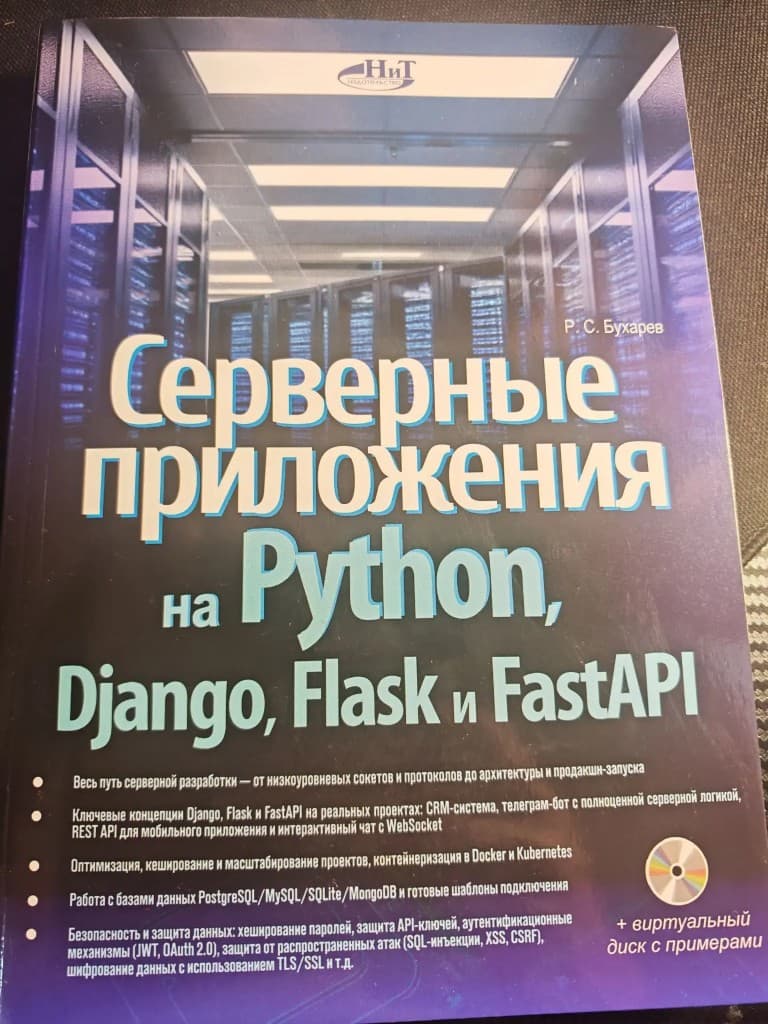
Server Applications in Python, Django, Flask and FastAPI
R. S. Bukharev
The path of server-side development in Python, from sockets and protocols to architecture and launch on a server. Django, Flask and FastAPI are covered through real projects: a CRM system, a Telegram bot with server-side logic, a REST API for a mobile app and a WebSocket chat. Separate chapters cover caching and scaling, Docker and Kubernetes, PostgreSQL, MySQL, SQLite and MongoDB, and security: password hashing, JWT and OAuth 2.0, protection against SQL injection, XSS and CSRF, TLS.
ProgrammingPythonBackendApplied in 1 project