Remote Work: A Crash Course in Working from Home
Gleb Arkhangelsky, Olga Strelkova
- Productivity
A short practical guide to remote work by time management specialists. The book came out in spring 2020, when offices were moving to remote work en masse.
Inside: how to organize your workspace and day, avoid burning out at home, stay in touch with the team and manage remote employees.
Key ideas
- At home you need boundaries: a separate place, a start and an end to the working day.
- Plan the day around results, not hours online.
- In a remote team, agreements are recorded in writing.
- Regular short status reports replace hallway conversations.
- Rest needs planning too, otherwise work spreads over the whole day.
How I apply it
I work remotely with clients from 25 countries. I record all agreements in writing and show interim results on schedule, without waiting to be asked.
Where and how I applied it
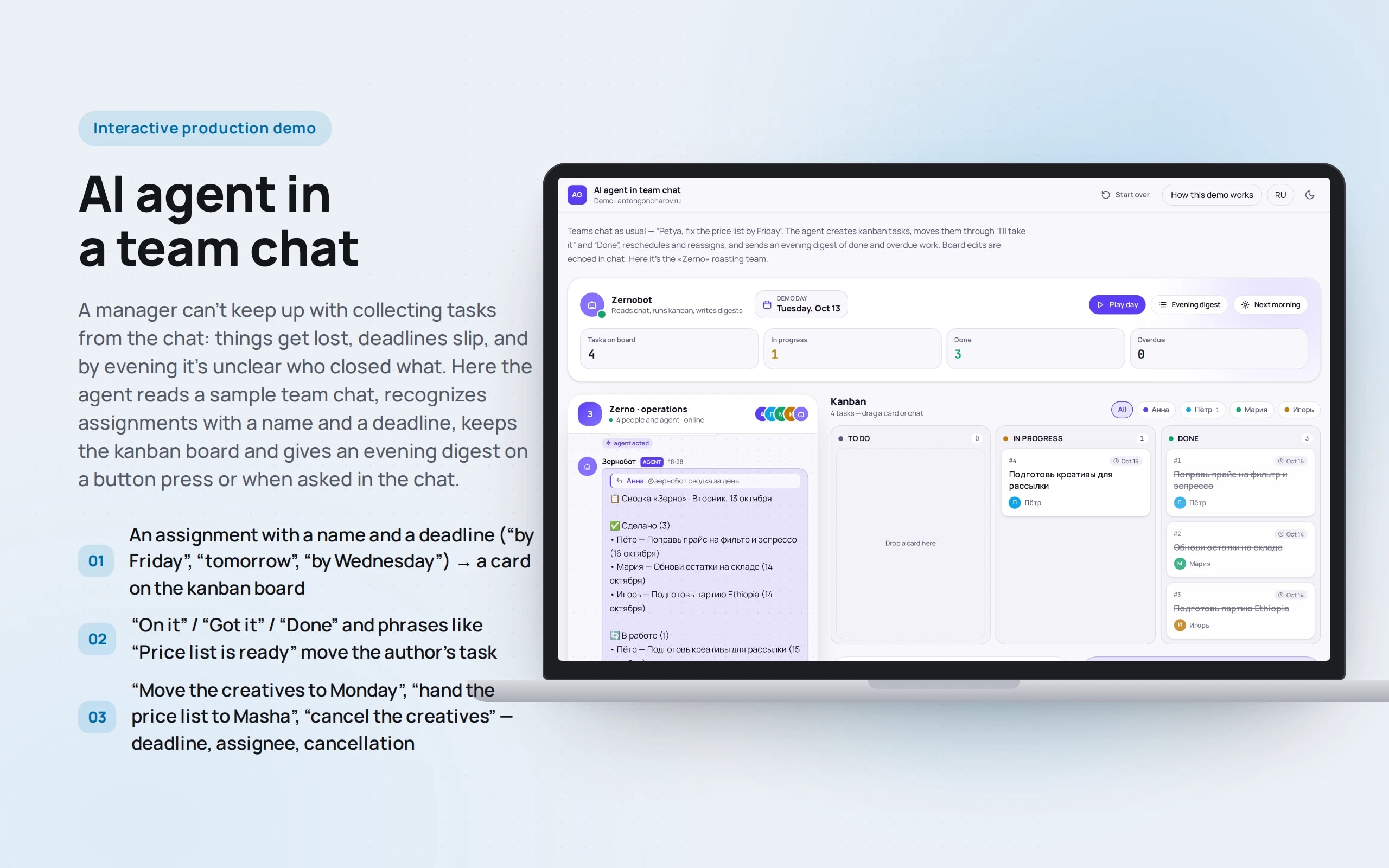
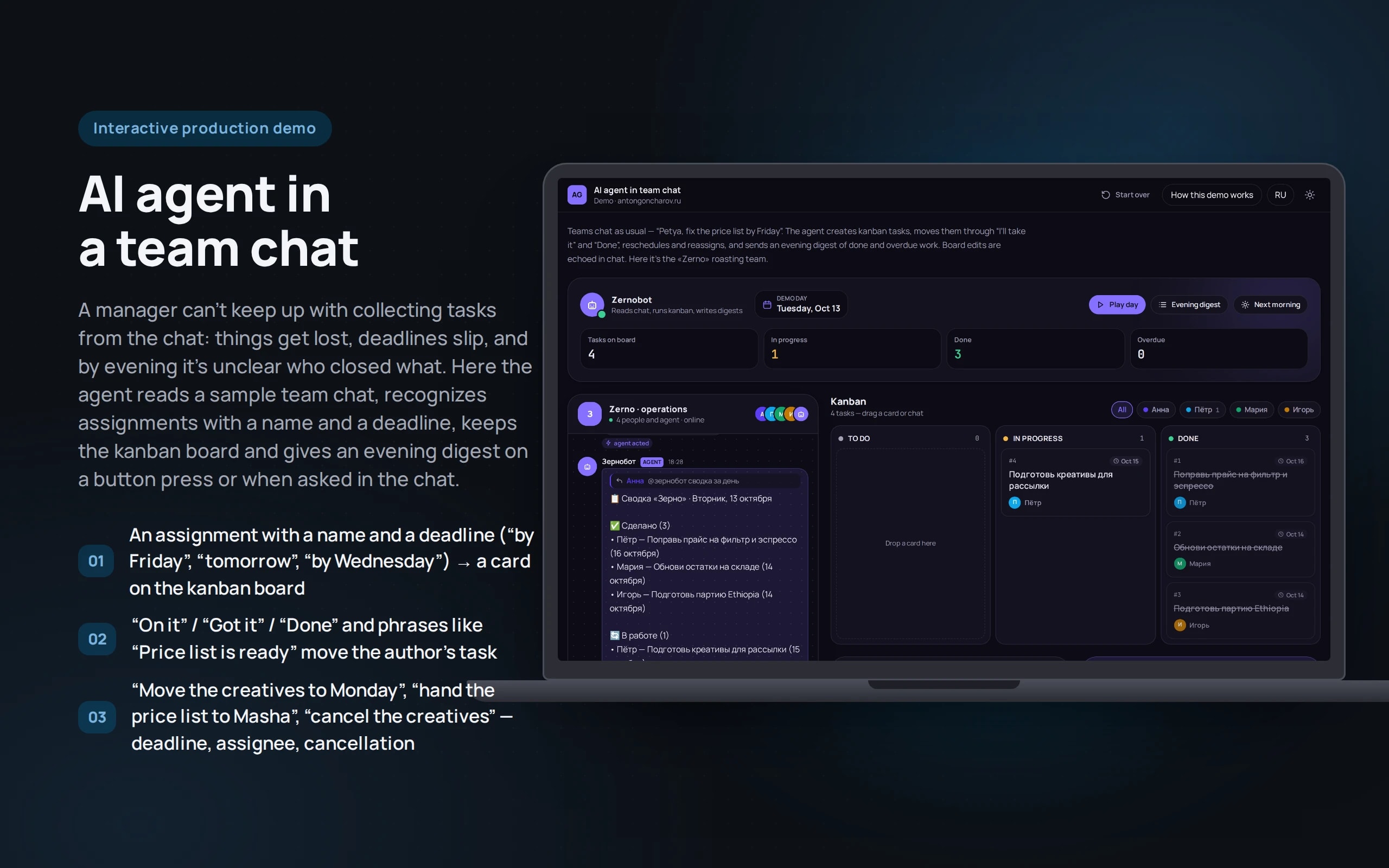
Demo · Web app · tasks from chat · kanban · evening digest
AI agent in a team chat
The agent turns assignments from the work chat into cards with an assignee and a deadline and sends a summary in the evening: agreements are written down and the status is visible without calls.
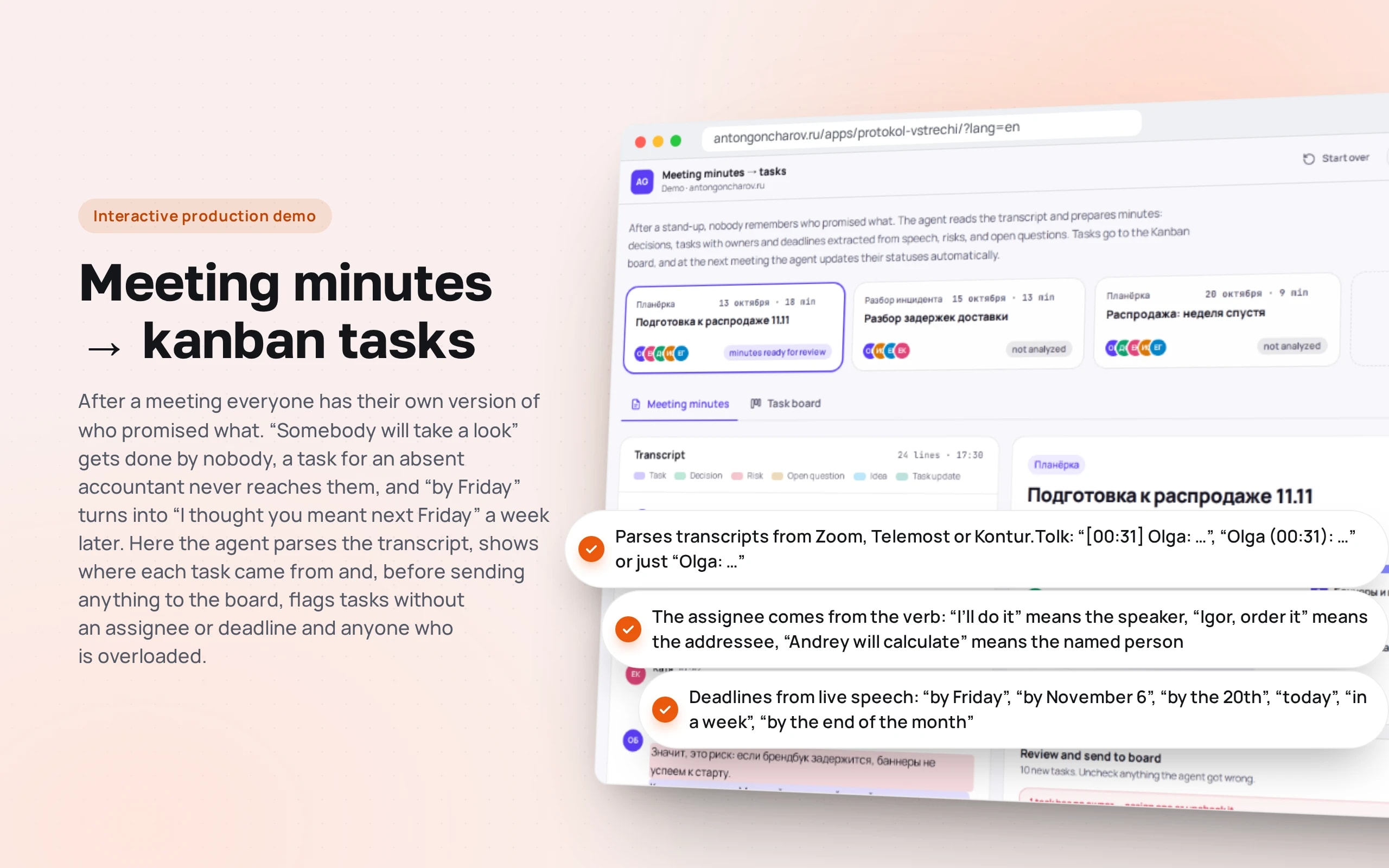
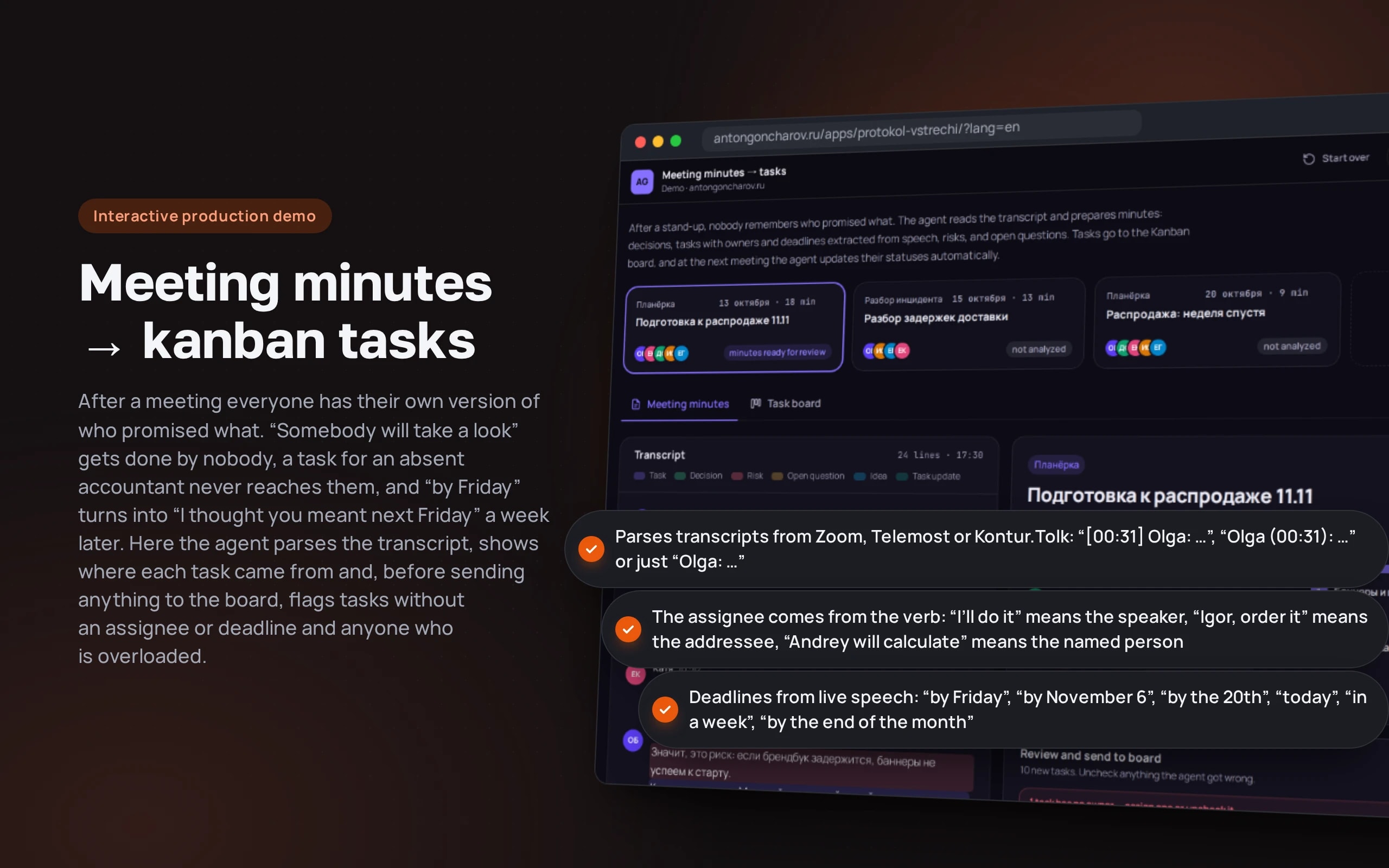
Demo · Web app · meeting transcript · minutes · kanban
Meeting minutes → kanban tasks
After a stand-up there are written minutes: decisions, tasks with an assignee and a deadline, risks and open questions.
More on the shelf
Reading
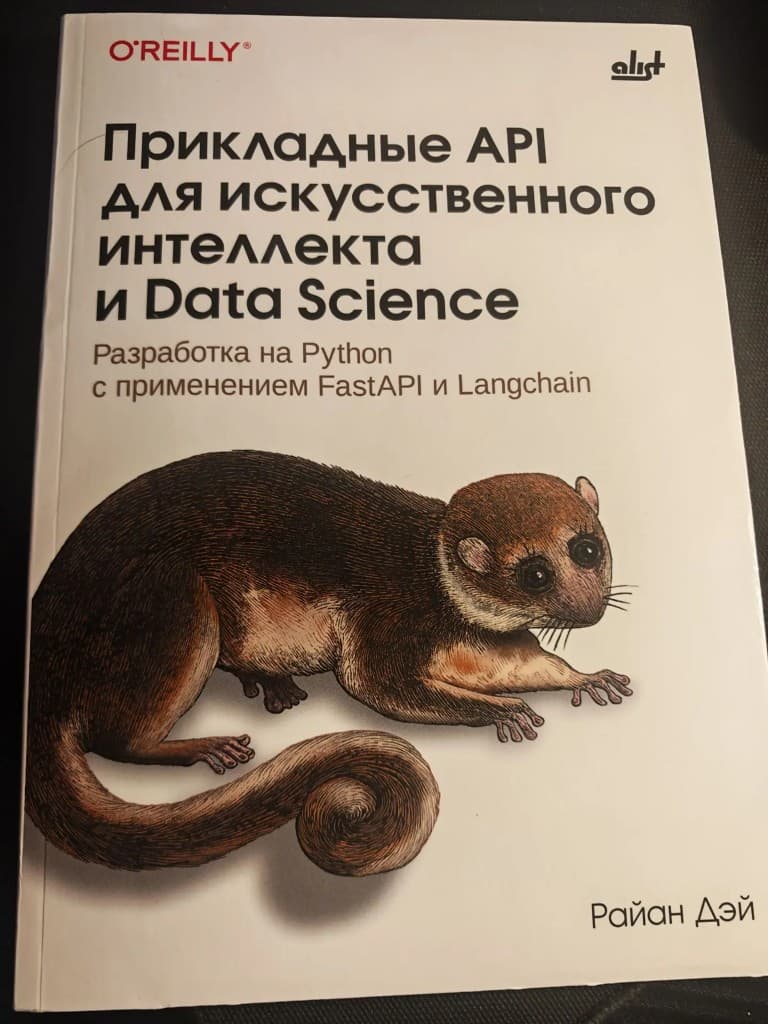
Hands-On APIs for AI and Data Science
Ryan Day
A practical book on building an API for data and connecting AI to it. The running project is a FastAPI service with a database and documentation, then an SDK for it, using the API in analytics and, finally, LangChain agents that call the API themselves.
AI and agentsPythonAPIApplied in 3 projectsReading
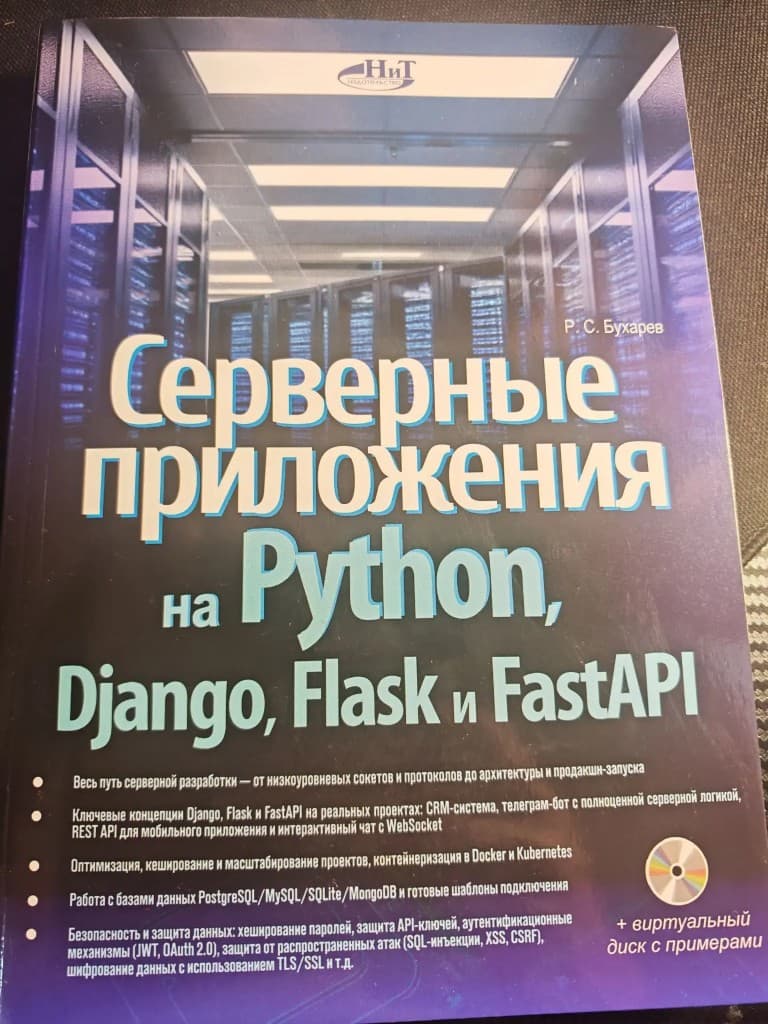
Server Applications in Python, Django, Flask and FastAPI
R. S. Bukharev
The path of server-side development in Python, from sockets and protocols to architecture and launch on a server. Django, Flask and FastAPI are covered through real projects: a CRM system, a Telegram bot with server-side logic, a REST API for a mobile app and a WebSocket chat. Separate chapters cover caching and scaling, Docker and Kubernetes, PostgreSQL, MySQL, SQLite and MongoDB, and security: password hashing, JWT and OAuth 2.0, protection against SQL injection, XSS and CSRF, TLS.
ProgrammingPythonBackendApplied in 1 project