A Textbook of Logic
Georgy Chelpanov
- Logic
- Thinking
A classic school textbook of formal logic used for decades. Brief and rigorous: concepts and definitions, judgments, syllogisms, induction, analogy, hypothesis and proof, logical fallacies.
Key ideas
- A definition must be commensurate, non-circular and not negative.
- A concept is divided on a single basis, and the parts must not overlap.
- A conclusion is valid only if the premises are true and its form is correct.
- Induction gives probable knowledge, and one counterexample is enough to refute it.
How I apply it
When reviewing a specification, I check the definitions of terms and the completeness of lists: that’s how contradictions are found before development starts, not after.
Where and how I applied it
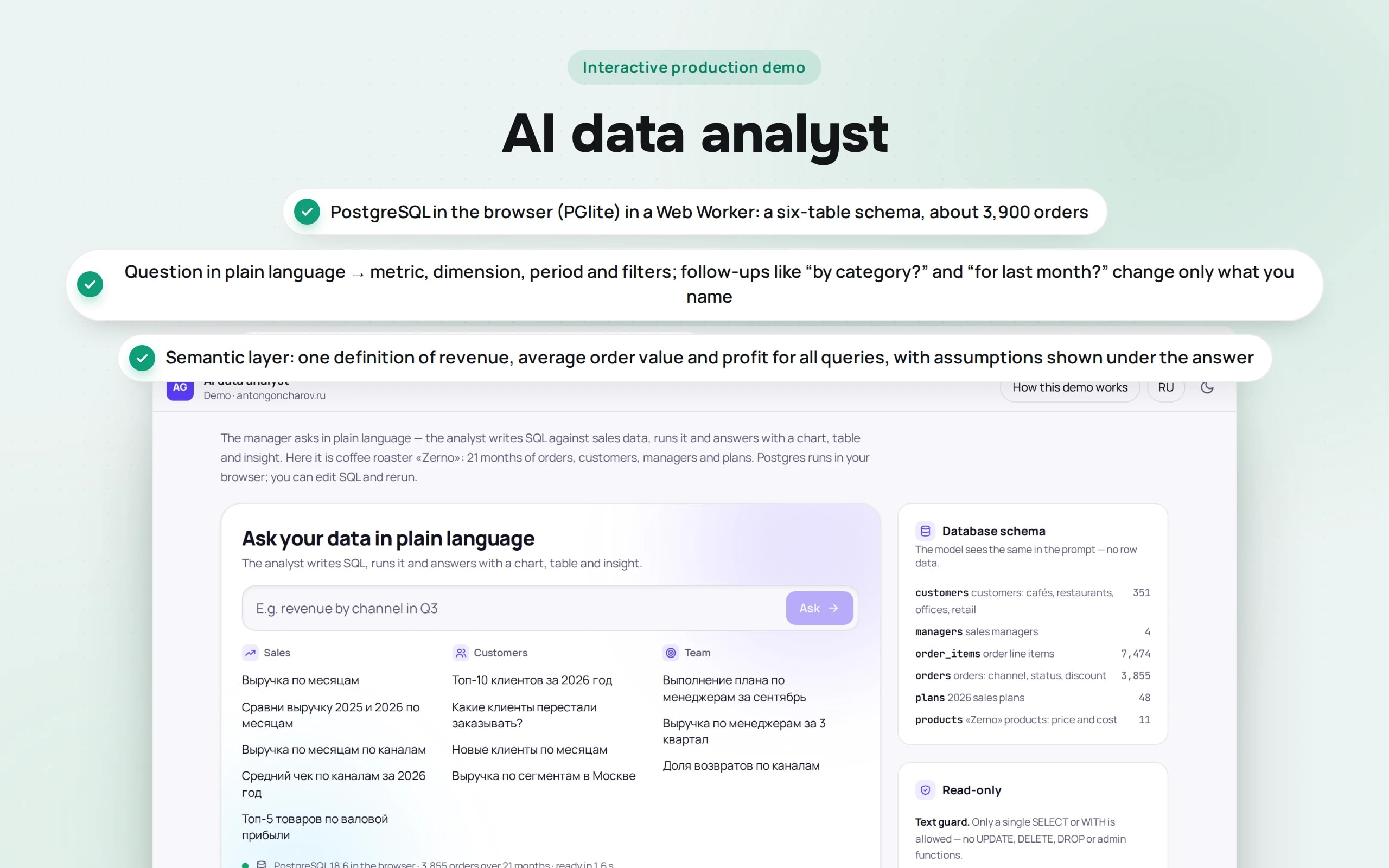
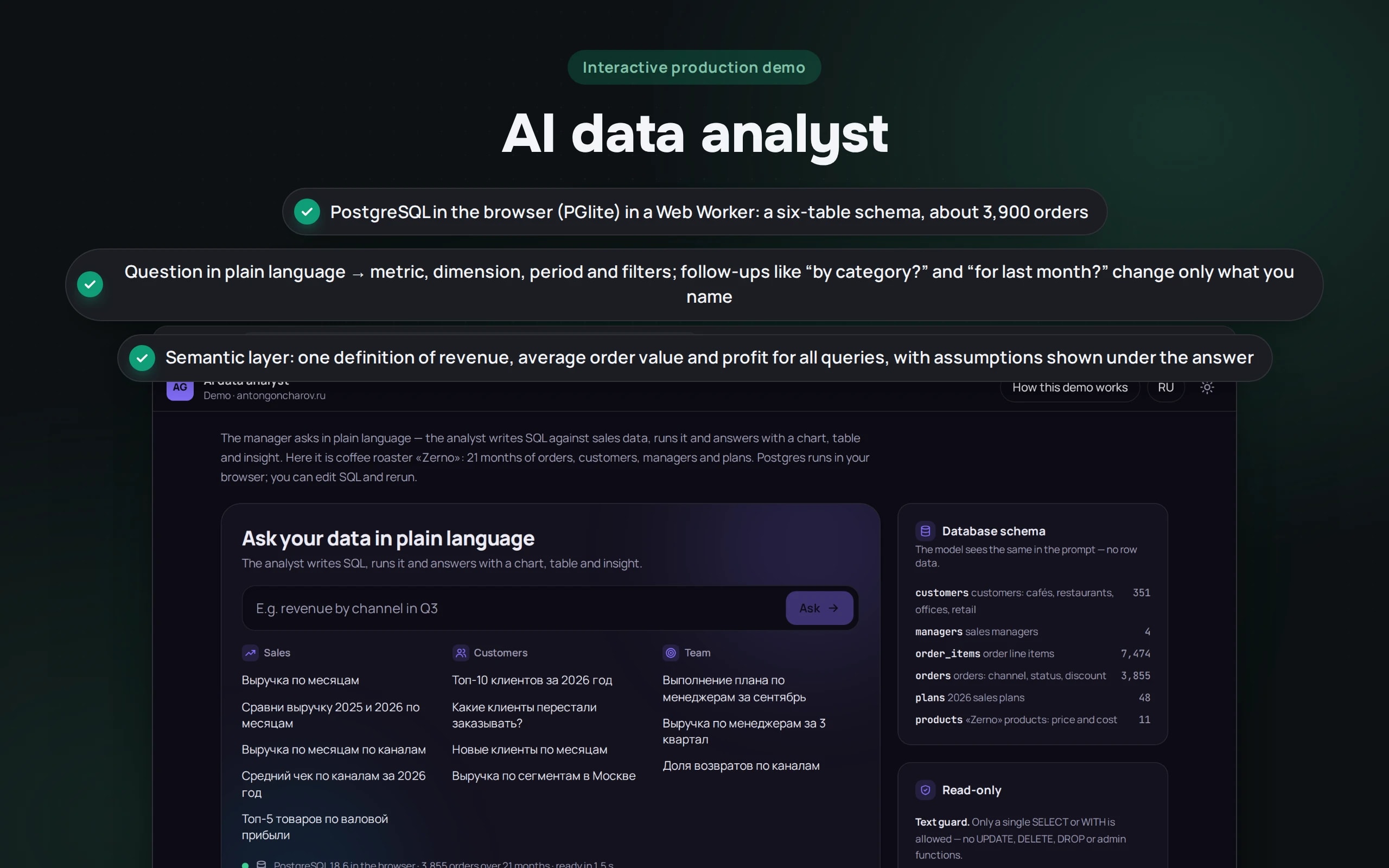
Demo · Web app · question → SQL → chart · PostgreSQL in the browser
AI data analyst
The semantic layer gives one definition of revenue, average order value and profit for every query, and the assumptions are shown under the answer: terms are defined before the calculation.
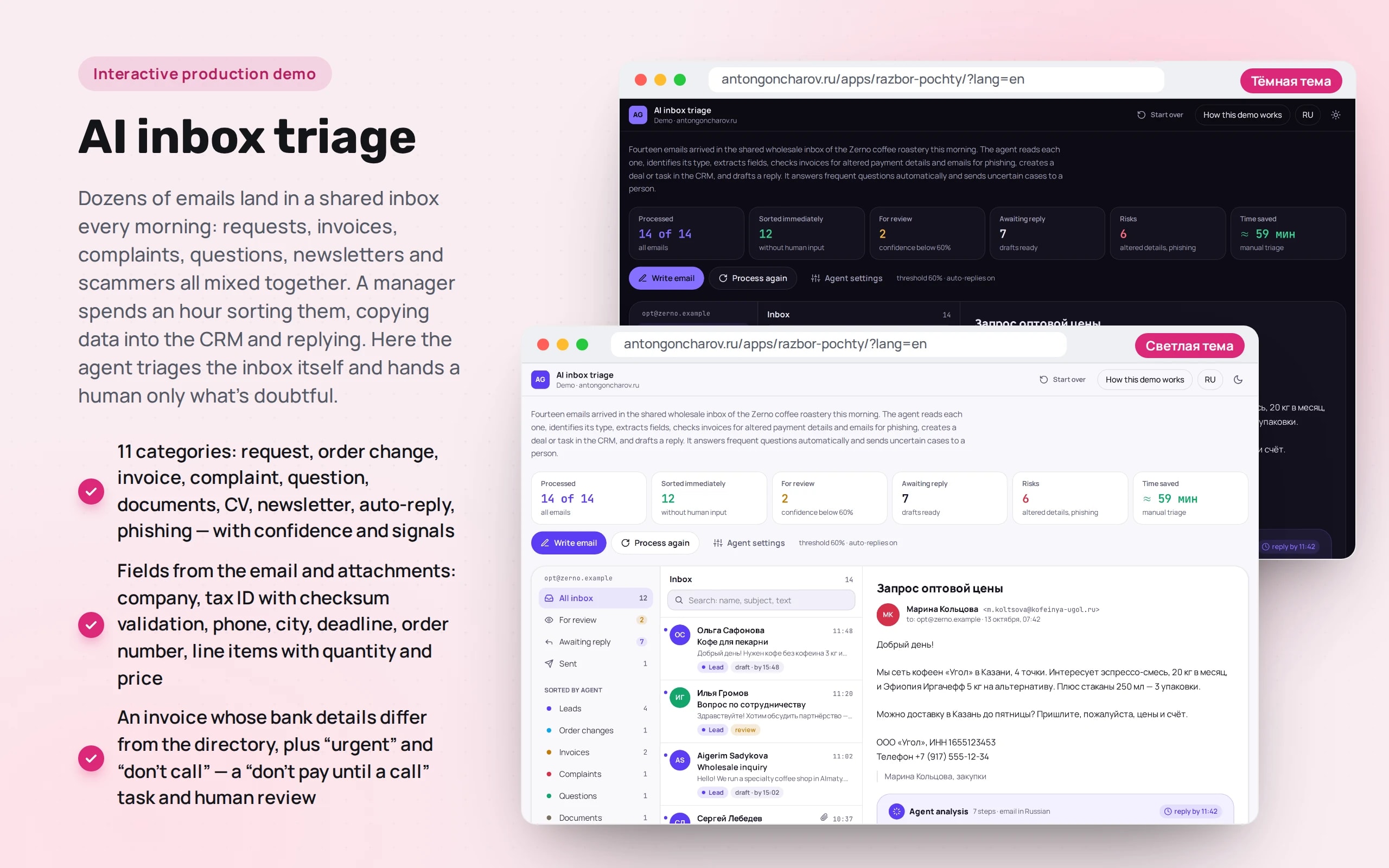
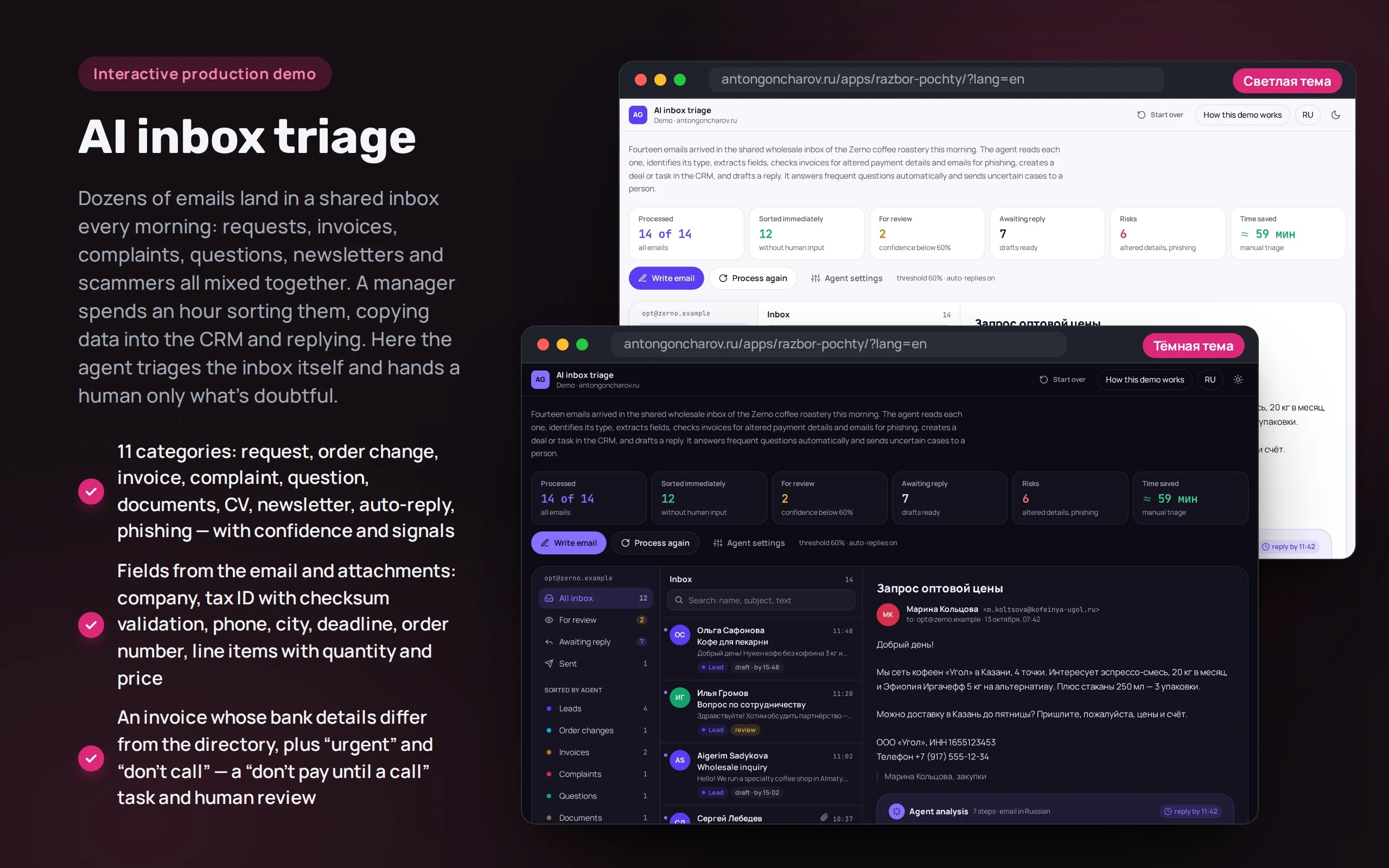
Demo · Web app · shared inbox · CRM · protection against bank detail fraud
AI inbox triage
Emails are sorted into 11 categories on a single basis — why the email came — and each category has the signs it is identified by.
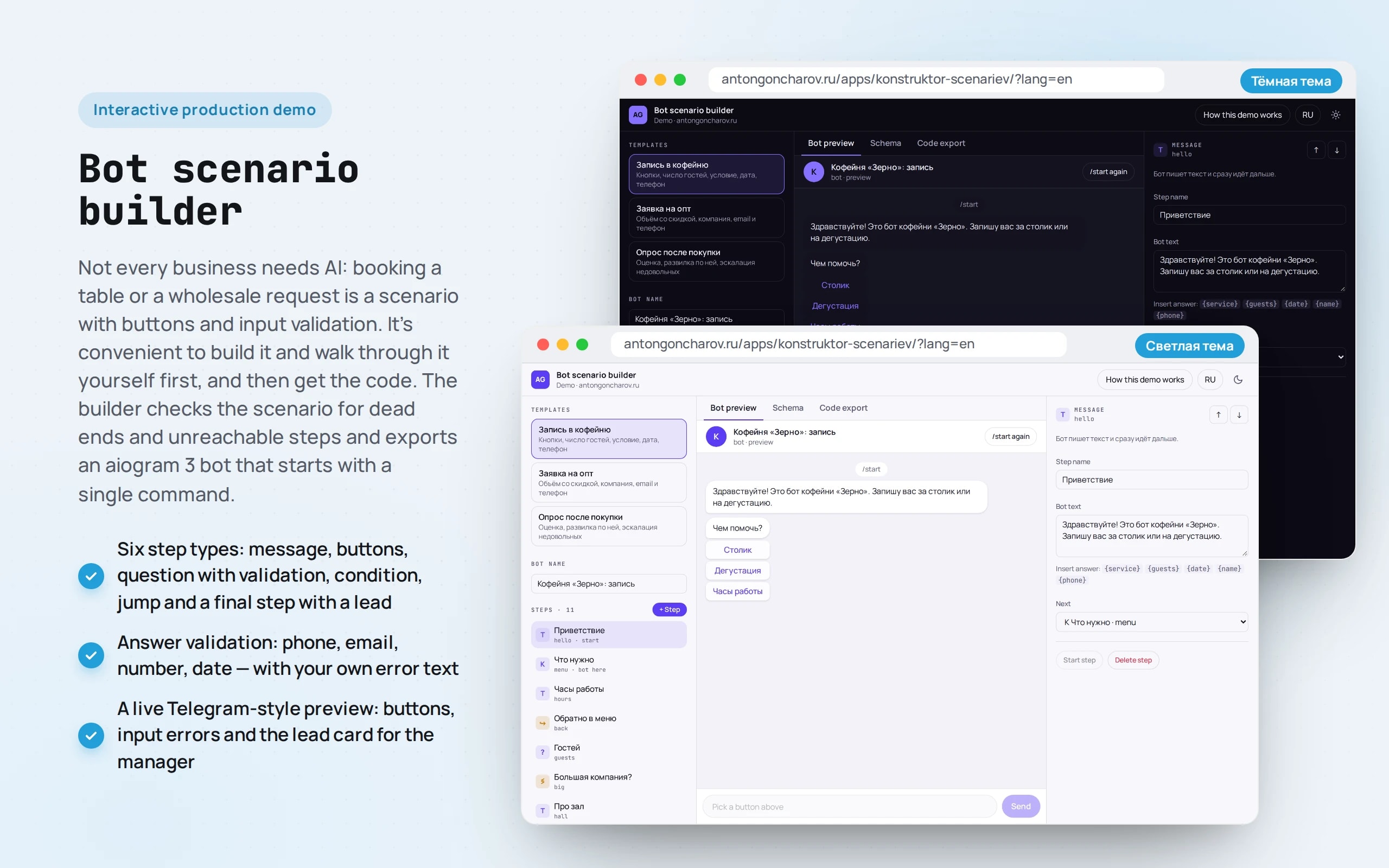
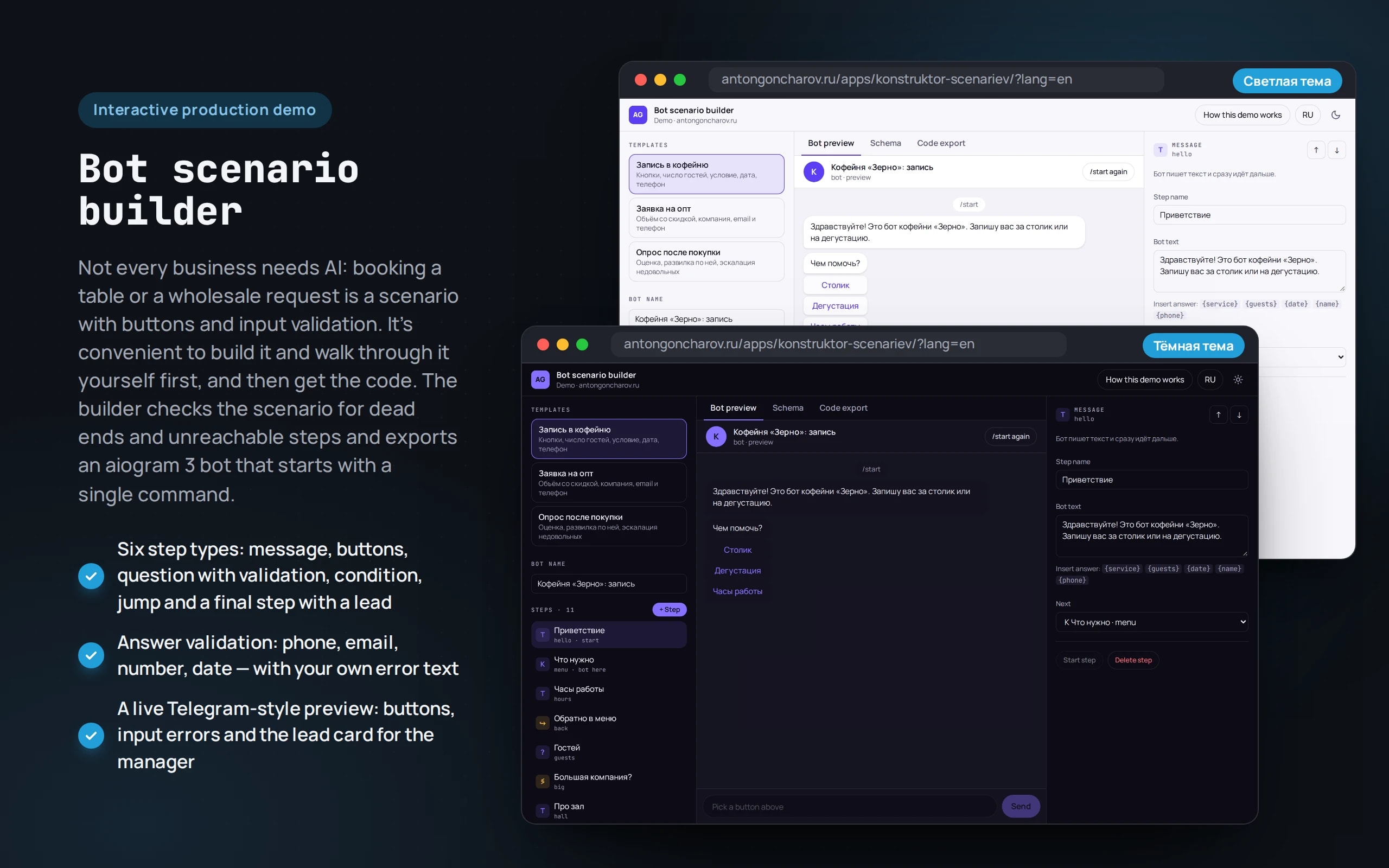
Demo · Web app · scenario · aiogram 3 code
Bot scenario builder
A bot scenario is checked like an argument: dead ends, unreachable steps, buttons that lead nowhere and loops are found before launch.
More on the shelf
Reading
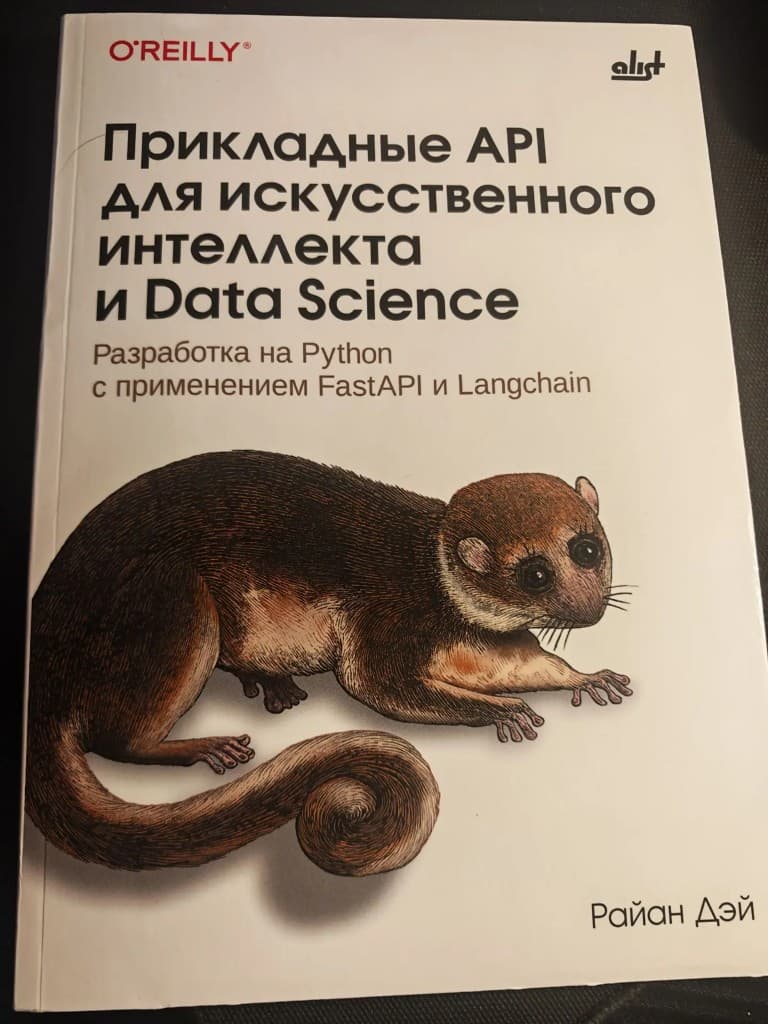
Hands-On APIs for AI and Data Science
Ryan Day
A practical book on building an API for data and connecting AI to it. The running project is a FastAPI service with a database and documentation, then an SDK for it, using the API in analytics and, finally, LangChain agents that call the API themselves.
AI and agentsPythonAPIApplied in 3 projectsReading
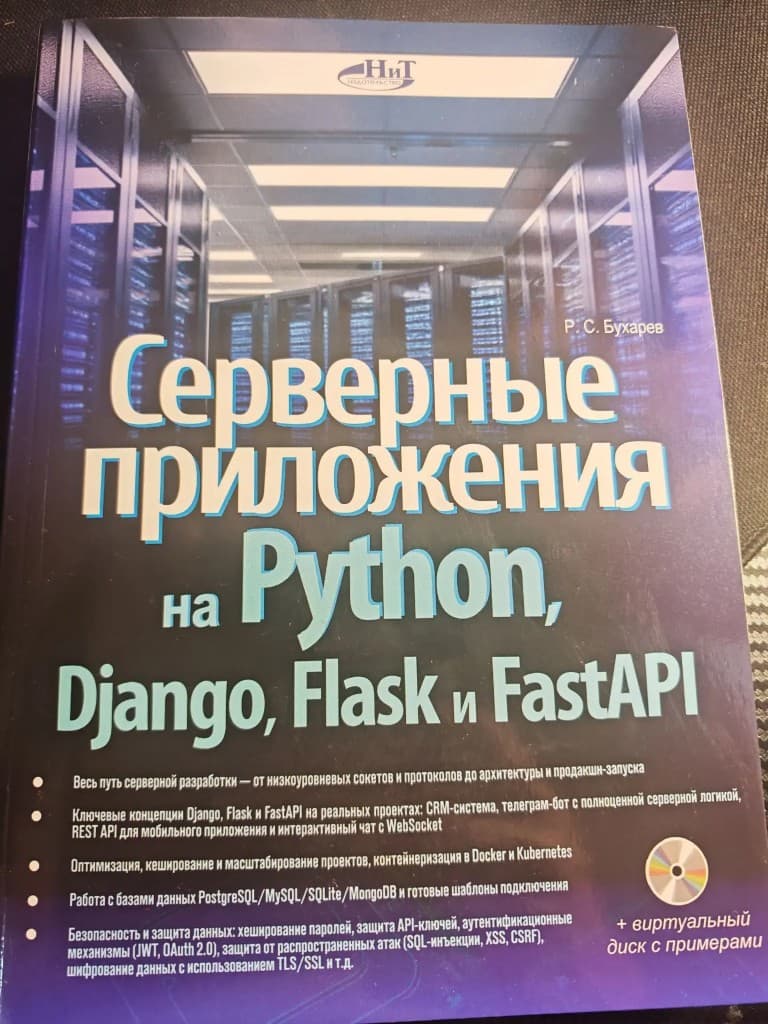
Server Applications in Python, Django, Flask and FastAPI
R. S. Bukharev
The path of server-side development in Python, from sockets and protocols to architecture and launch on a server. Django, Flask and FastAPI are covered through real projects: a CRM system, a Telegram bot with server-side logic, a REST API for a mobile app and a WebSocket chat. Separate chapters cover caching and scaling, Docker and Kubernetes, PostgreSQL, MySQL, SQLite and MongoDB, and security: password hashing, JWT and OAuth 2.0, protection against SQL injection, XSS and CSRF, TLS.
ProgrammingPythonBackendApplied in 1 project