Modern Operating Systems
Andrew S. Tanenbaum, Herbert Bos
- Programming
- Operating systems
The classic textbook on how operating systems work: processes and threads, memory management, file systems, input/output, deadlocks, virtualization, multiprocessor systems and security. At the end, Linux, Android and Windows are examined.
Key ideas
- An operating system is abstractions over hardware: a process, an address space, a file.
- Threads are cheaper than processes, but shared memory requires synchronization.
- Virtual memory and paging let programs not think about physical memory.
- A deadlock is easier to prevent with a resource acquisition order than to cure afterwards.
How I apply it
The bots and APIs I write run in containers on Linux. Understanding processes, memory and I/O helps me choose between threads, processes and asyncio and figure out why a service has hit a memory or disk limit.
Where and how I applied it
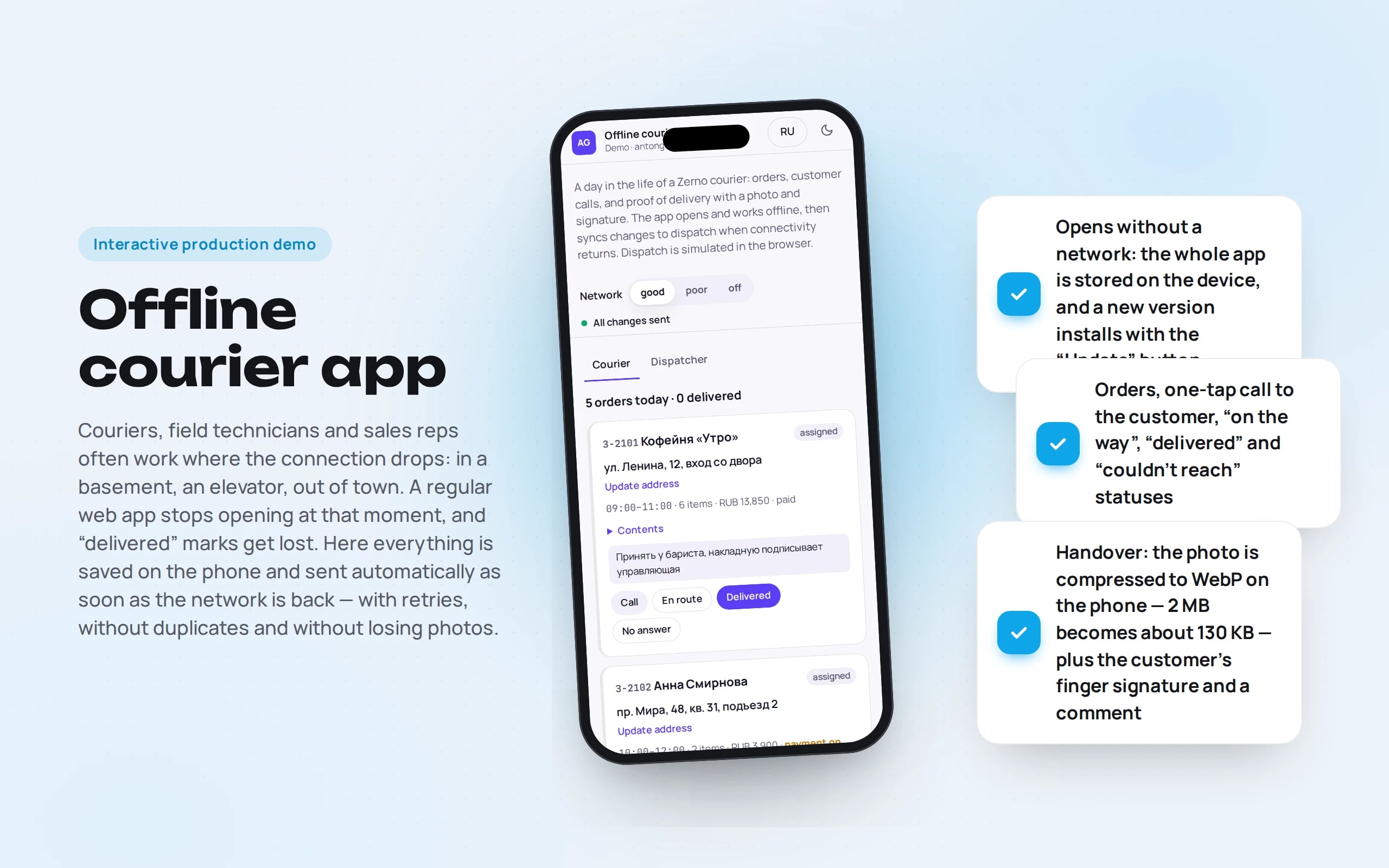
Demo · Web app · PWA · vanilla JS
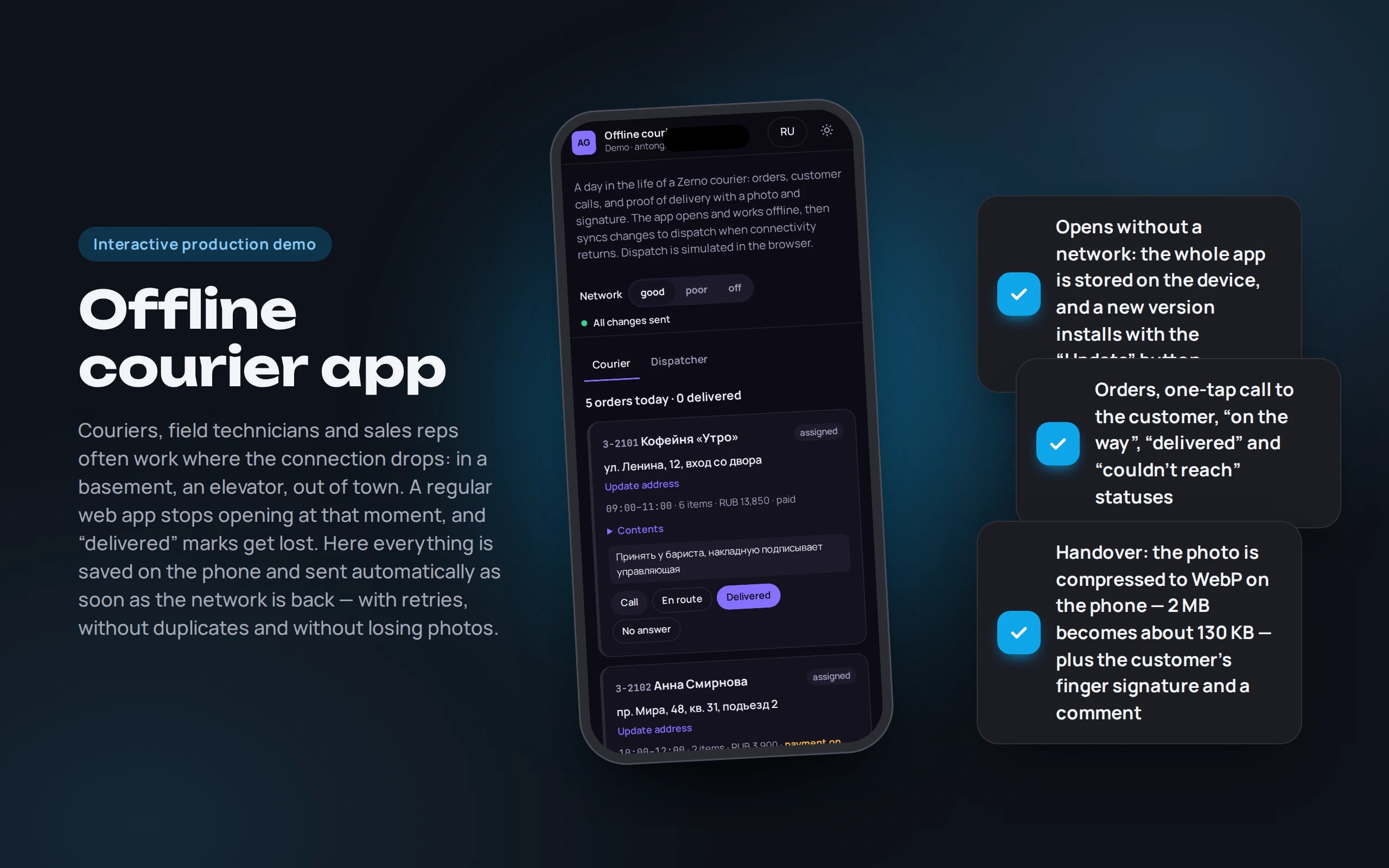
Offline courier app
A Service Worker keeps the app on the device, and the change queue is sent in order with a growing pause on a poor connection.
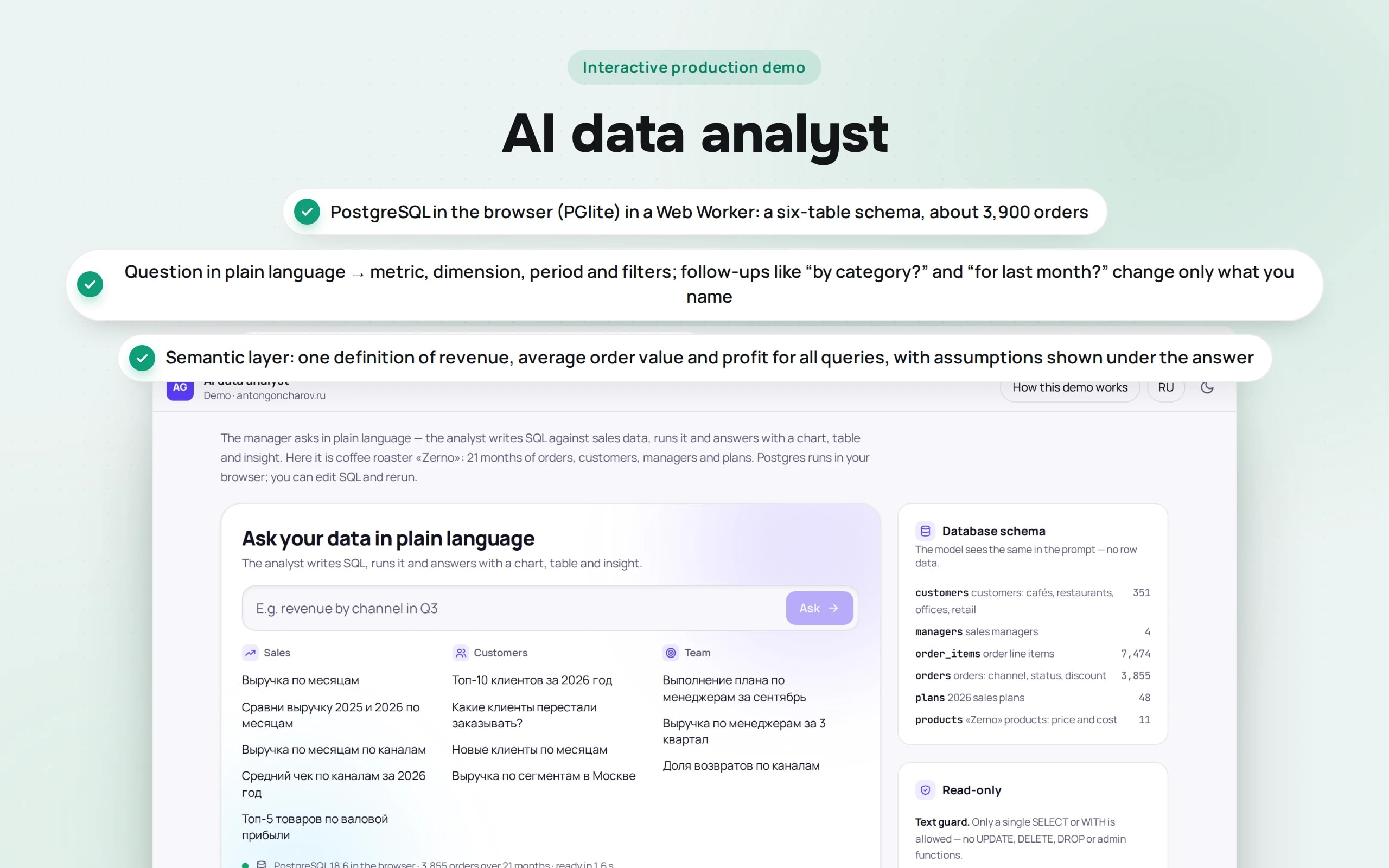
Demo · Web app · question → SQL → chart · PostgreSQL in the browser
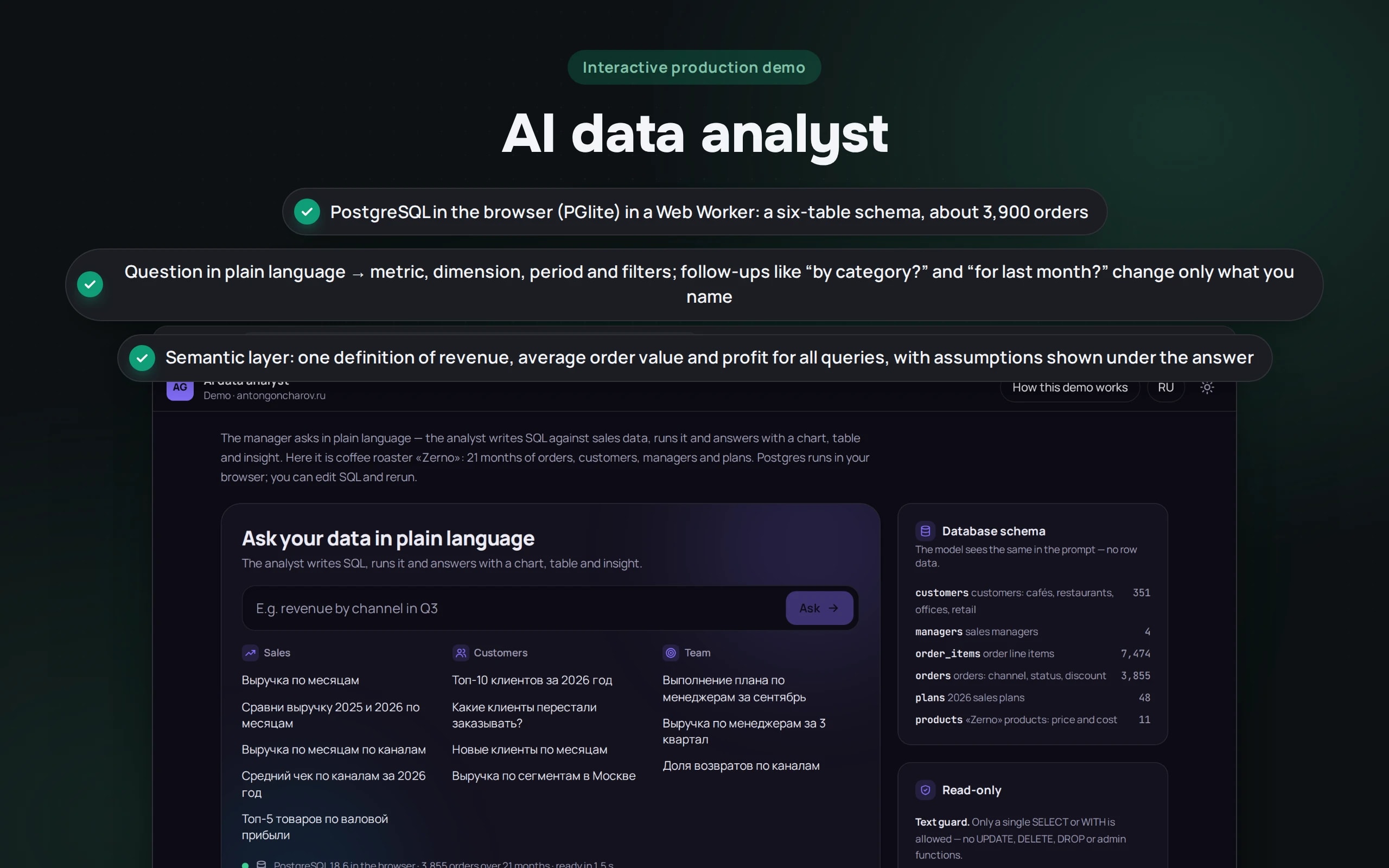
AI data analyst
PostgreSQL runs in a separate Web Worker thread, and a query is stopped after 5 seconds — the interface doesn’t freeze.
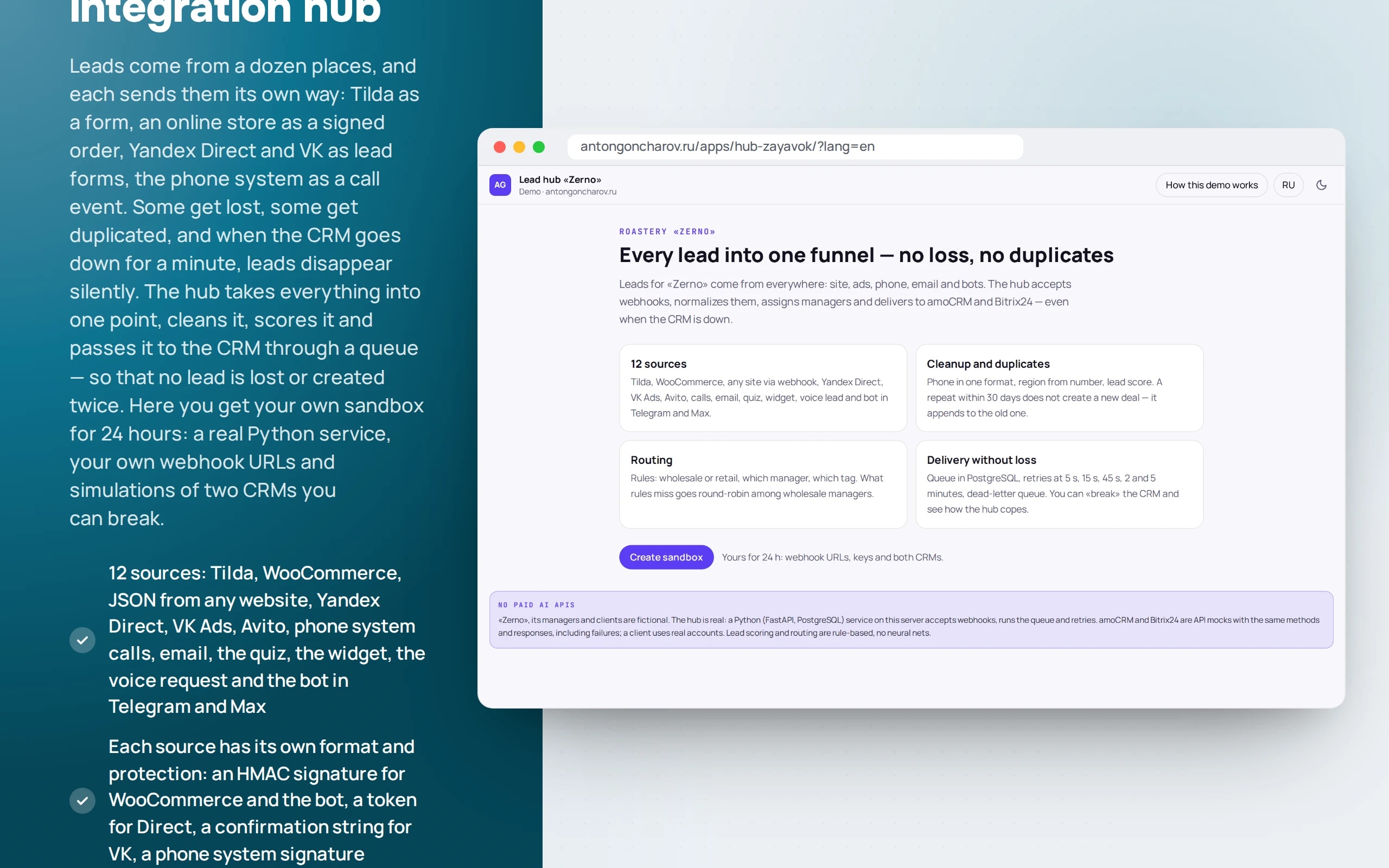
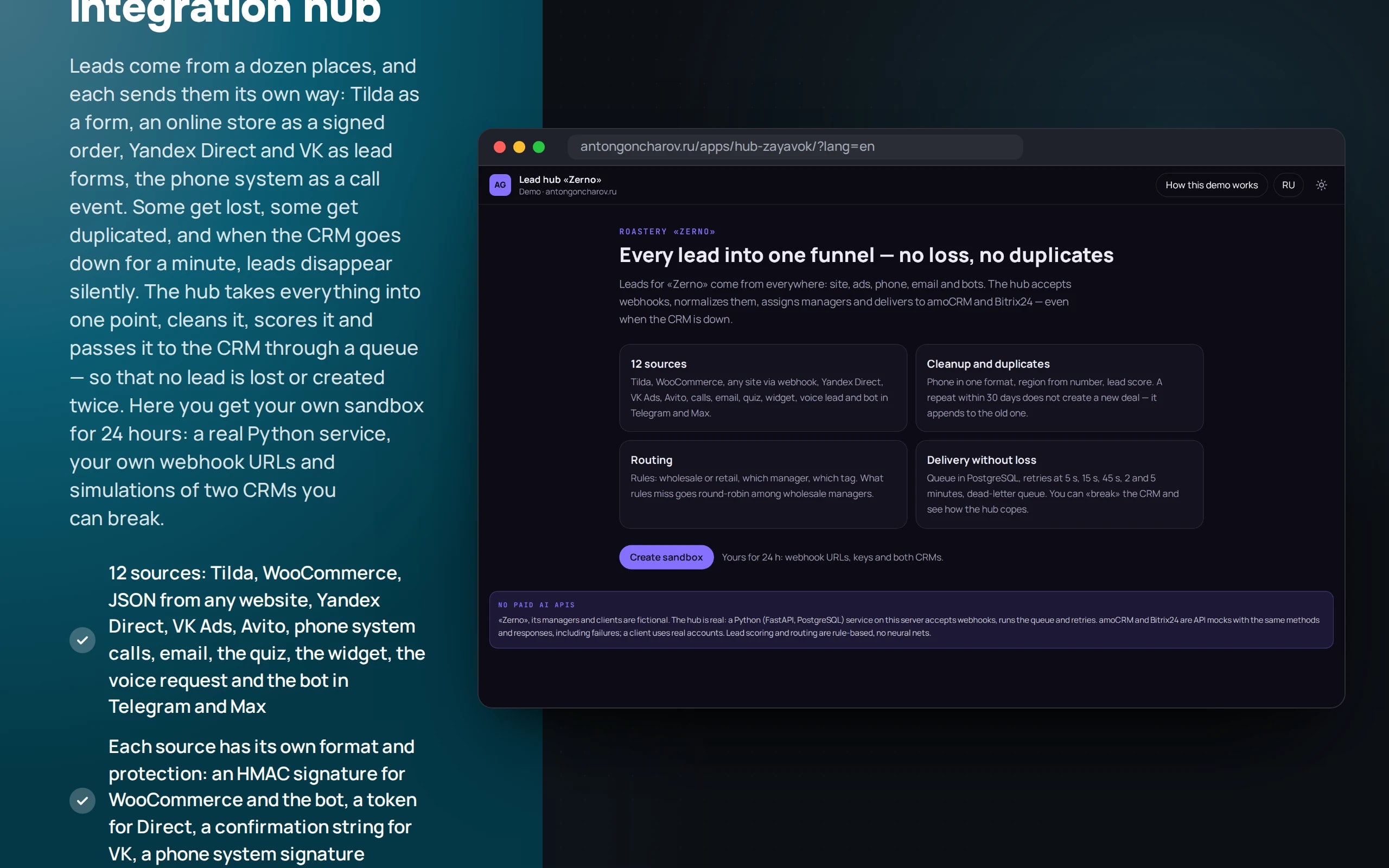
Demo · Python backend · webhooks → amoCRM and Bitrix24
Lead integration hub
Delivery to CRM is asynchronous and parallel: while one CRM isn’t responding, the other leads don’t wait.
More on the shelf
Reading
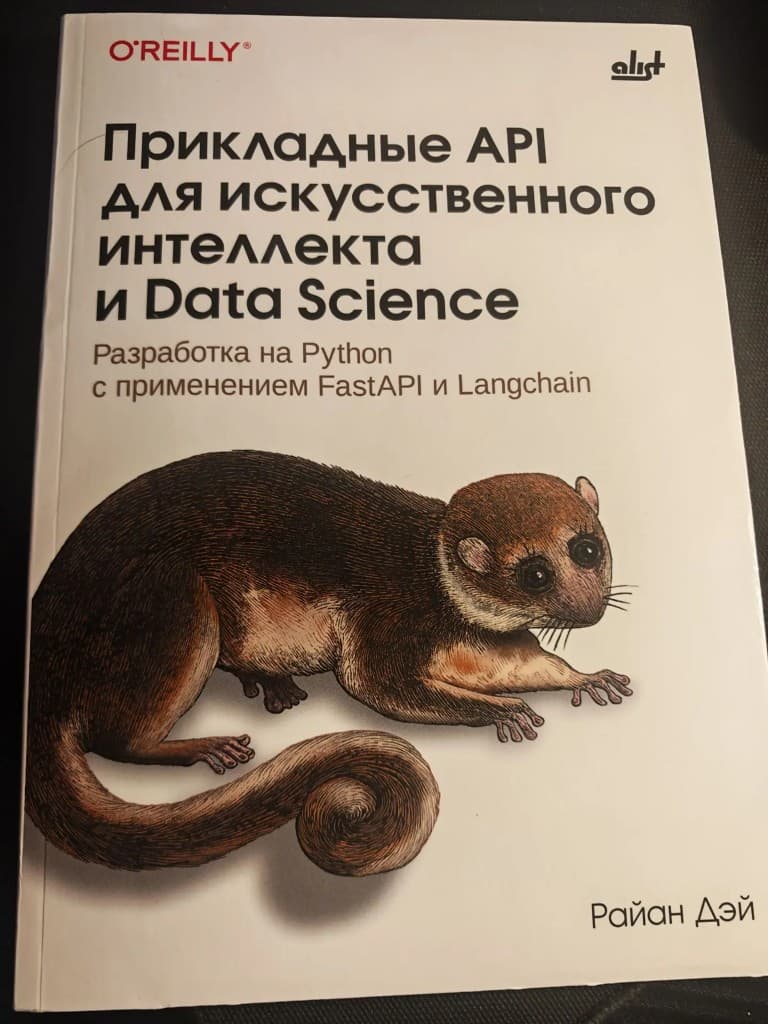
Hands-On APIs for AI and Data Science
Ryan Day
A practical book on building an API for data and connecting AI to it. The running project is a FastAPI service with a database and documentation, then an SDK for it, using the API in analytics and, finally, LangChain agents that call the API themselves.
AI and agentsPythonAPIApplied in 3 projectsReading
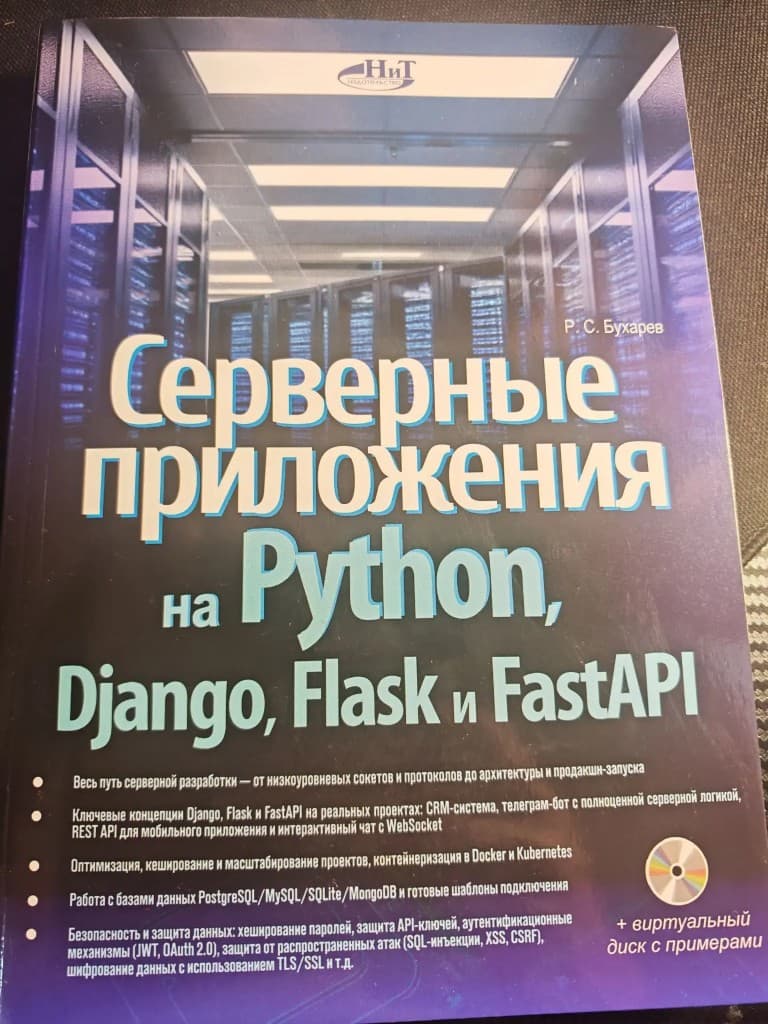
Server Applications in Python, Django, Flask and FastAPI
R. S. Bukharev
The path of server-side development in Python, from sockets and protocols to architecture and launch on a server. Django, Flask and FastAPI are covered through real projects: a CRM system, a Telegram bot with server-side logic, a REST API for a mobile app and a WebSocket chat. Separate chapters cover caching and scaling, Docker and Kubernetes, PostgreSQL, MySQL, SQLite and MongoDB, and security: password hashing, JWT and OAuth 2.0, protection against SQL injection, XSS and CSRF, TLS.
ProgrammingPythonBackendApplied in 1 project